

A team enters dreams to plant an idea in a sleeping man’s mind. At the end, a spinning top keeps turning as the screen goes black. Nolan’s ending is built so that the answer is not the point. Here is the Inception ending explained, with full spoilers.

Inception (2010)
Director: Christopher Nolan
Cast: Leonardo DiCaprio, Joseph Gordon-Levitt, Elliot Page
Inception ending explained in brief
The film cuts to black before we see whether the top falls. Cobb walks away from it to his children, which suggests he no longer needs proof. Nolan has said in interviews that the ambiguity is deliberate, so both readings, a real reunion and a dreamed one, remain open. I think the film itself supports the first reading but does not close the second.
What is the plot of Inception in short?
Dom Cobb (Leonardo DiCaprio) is an extractor who steals secrets from people’s dreams. The businessman Saito offers him a way back to his children in exchange for the opposite task: planting an idea, “inception”, in the mind of the heir Robert Fischer so that he breaks up his father’s company.
The team builds nested dreams: a rainy city, a hotel, a snow fortress, and below them the shared unconscious space called limbo. A kick, a drop or jolt, wakes the sleepers from one level to the next.
Who is Mal and why does she haunt Cobb?
Mal (Marion Cotillard) is Cobb’s late wife. They once spent decades in limbo together, and she came to believe that the real world was another dream. After they returned, she took her own life to “wake up” and framed Cobb to look like her murderer, which is why he cannot go home.
Her projection sabotages Cobb’s missions because it is made of his guilt. The film treats her less as a villain than as the cost of an idea planted in the wrong place, the very thing Cobb is now trying to do to Fischer.
What does the spinning top mean?
The top was Mal’s totem, an object whose behavior only its owner knows. In a dream it should spin forever, in reality it should fall. Cobb uses it to test whether he is dreaming.
In the last shot he spins it and walks to his children. The camera stays on the top, which wobbles slightly, and the film cuts to black. The shot is built to make us ask the question that Cobb himself stops asking.
Is Cobb dreaming at the end?
Clues are offered for both sides. Cobb’s wedding ring appears in dream scenes and not in waking ones, according to many viewers, and at the end he is not wearing it. Michael Caine has said Nolan told him that if his character is in the scene, it is real. Against this, the children look the same as in Cobb’s memories, and the sequence echoes the dream.
These are interpretations built on details, not confirmed facts. Nolan has said the decisive thing is that Cobb is no longer watching the top.
What does the ending say about the film’s real theme?
Inception is about grief and the wish to choose a version of reality. Cobb finally lets go of Mal and accepts a world that may not be provable. That is why the reunion with his children matters more than the verdict on the top.
If you liked this film
From film puzzles to reading
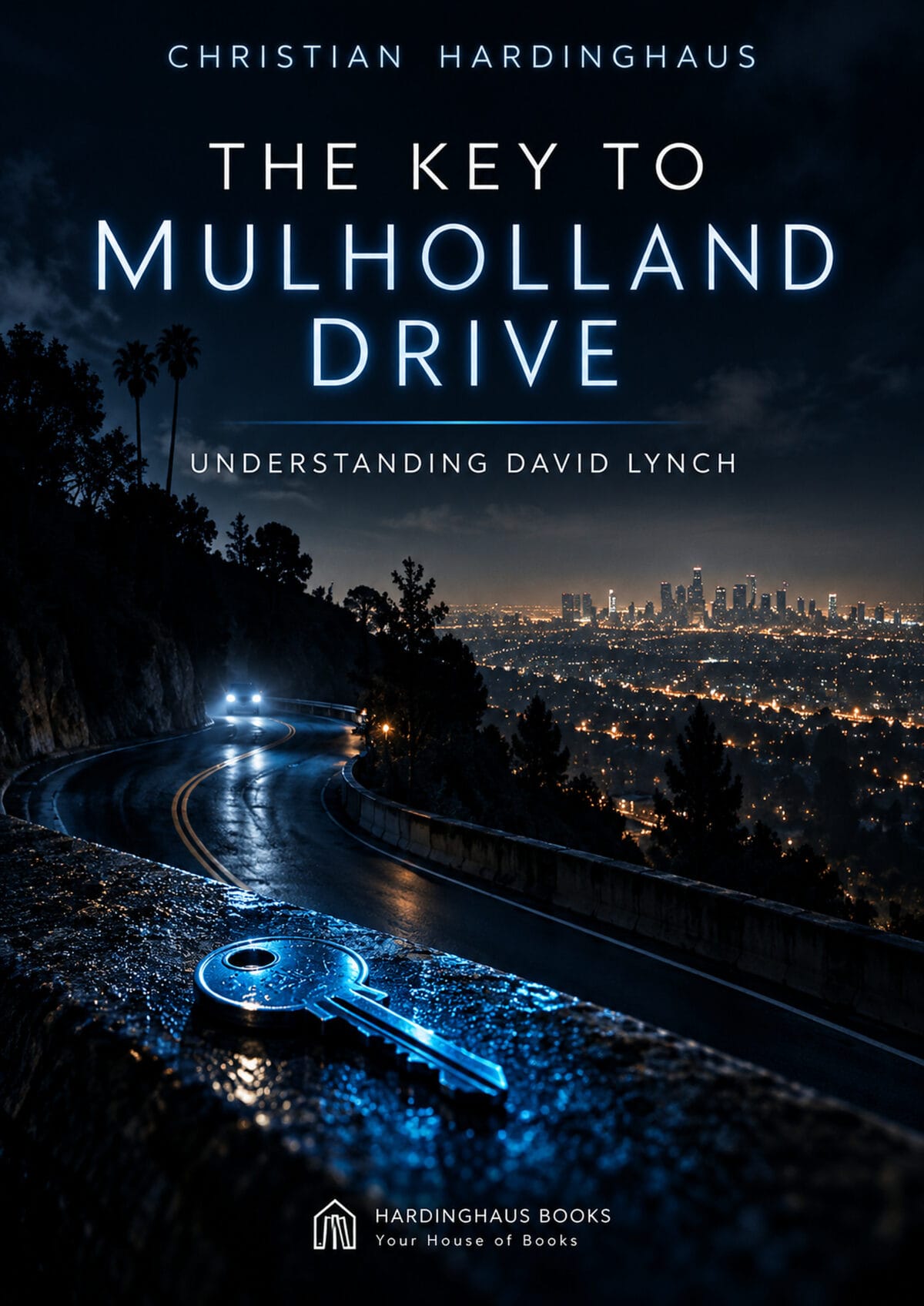
The Key to Mulholland Drive
As in Lynch’s cinema, it helps to distinguish recurring imagery from the events of the plot. My book develops that approach through Mulholland Drive.
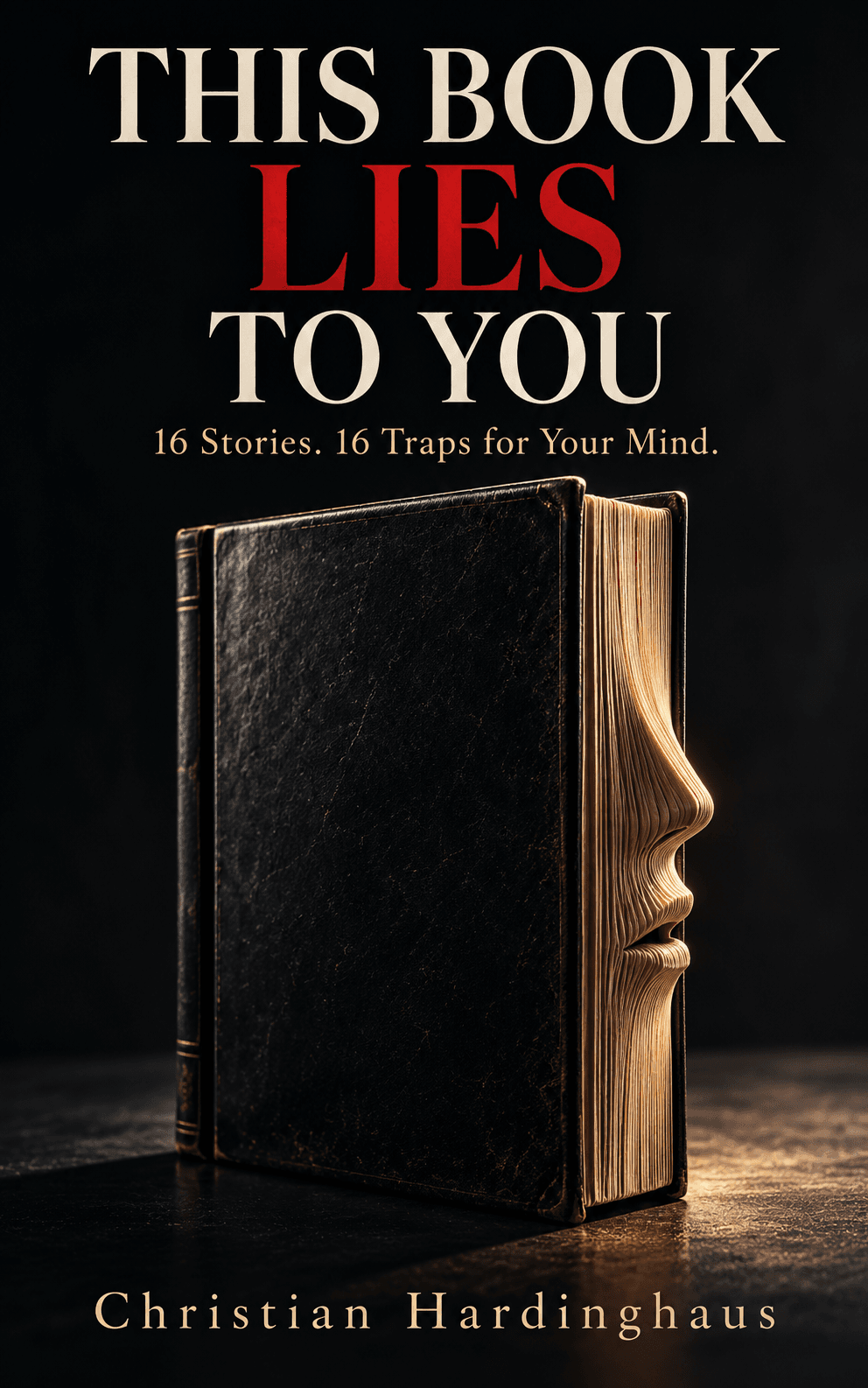
This Book Lies to You
For readers who want to experience uncertain ground in fiction, this is the natural next step after the film.
Inception ending FAQ
Is the top still spinning at the end?
The film does not show it. The picture cuts to black while the top wobbles, and the director leaves the answer open.
Did Cobb actually go home?
On the surface yes, he passes through customs and reaches his children. Whether this is waking life is exactly the open question.
What is limbo in Inception?
Limbo is the deepest dream level, an unstructured space of the shared subconscious where time passes extremely slowly. Cobb and Mal built a world there and lived in it for decades.
Film and sources
Primary work: Inception (2010), Christopher Nolan.
- Christopher Nolan: Inception: The Shooting Script (Insight Editions, 2010).
- Interviews with Christopher Nolan and Michael Caine on the ending (various outlets, 2010 onward).
This is an editorial analysis. Interpretations are identified as readings; comments by the director are attributed separately, and unresolved questions remain open. Poster: the TMDB image already used in the encyclopedia.