
True Crime · Cold Cases · Digital Forensics
True crime and unsolved disappearances
I write about unsolved disappearances, cold cases and the question of how far people online should go when they investigate real crimes. My main case is the disappearance of Kris Kremers and Lisanne Froon in Panama: together with Annette Nenner I went through the investigation files and spent months researching on the ground.
On this page you will find my true crime books, the STILL VANISHED encyclopedia, the forensic analysis of the Panama case and the case lexicon. What is documented is kept apart from what is only assumed.
My true crime books
One book reconstructs a single case as precisely as the sources allow. The other asks why millions of people follow real crimes, and what happens when they start investigating themselves.
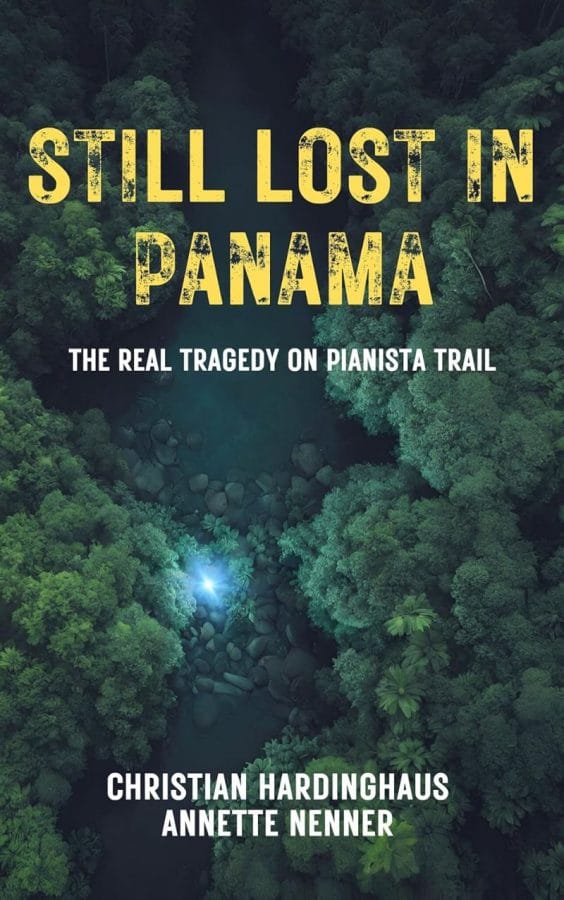
Still Lost in Panama – The True Tragedy of the Pianista Trail
with Annette Nenner · expanded second edition
On 1 April 2014 the Dutch students Kris Kremers and Lisanne Froon did not return from a hike on the Pianista Trail near Boquete. Annette Nenner and I analysed the investigation files and forensic reports, spoke to old and new witnesses and went into the cloud forest ourselves. The book separates documented evidence from the stories that grew up around the case and says where it is still open.
Also available as an audiobook on Audible.
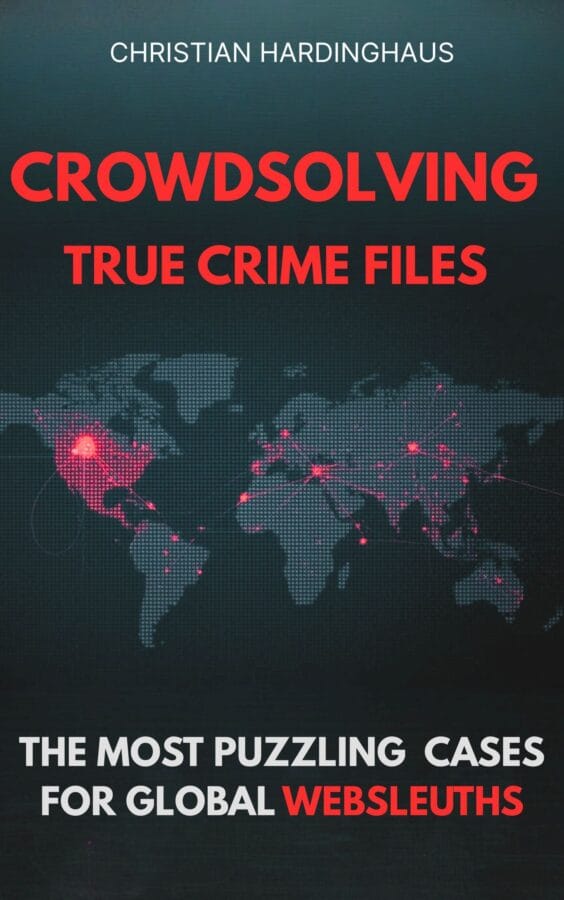
Crowdsolving True Crime Files – On the Hunt for Justice
Dr. Christian Hardinghaus
From the Victorian penny press to the podcast boom: why does true crime reach such a large audience, and what responsibility comes with it? Eighteen cases, among them Frauke Liebs, the Lake Bodom murders, the Dyatlov Pass, Phoebe Handsjuk, Jennifer Fairgate and the Somerton Man, show what web sleuths can achieve and where crowdsolving turns into false accusation and digital vigilantism.
The case of Kris Kremers and Lisanne Froon
Few missing persons cases have been talked to pieces online as thoroughly as this one. So there are three ways in, depending on what you are looking for: the digital traces, the names and places, or the whole story. If you are new to the case, start with the forensic analysis.
Digital forensics
Phone logs, emergency call attempts, the night photos, timelines and search operations, analysed on the basis of the official expert reports.
Read the analysis →Case lexicon
More than 170 people, places, authorities, search areas and find sites, each with its documented role in the case. With search, filters and map links.
Open the lexicon →The book
The full reconstruction: from the start in Boquete to the search, the finds and the theories that followed.
Go to the book →Orientation, not speculation: I do not keep lists of suspects and I do not present unconfirmed claims as facts. Where the files are silent, I say so.
Encyclopedia and case files on unsolved cases
STILL VANISHED – Encyclopedia of Mysterious Cases
A growing reference work on missing persons, unidentified dead and cold cases. Each entry gathers the known facts, a timeline and sources for further reading.
Open the encyclopediaBetween the Shadows – latest case files
- The Beaumont childrenAustralia’s most famous missing persons case
- Frauke LiebsThe unsolved murder from Paderborn, Germany
- The Dyatlov Pass incidentWhat happened to the nine hikers in the Urals?
- The Hinterkaifeck murdersSix deaths on a Bavarian farm, 1922
- The Lake Bodom murdersFinland’s campsite mystery
How I research
A case analysis does not start with a theory but with the material. I check sources against each other, point out contradictions and name the gaps.
Files
Investigation files, search logs, court records and forensic reports.
Interviews
Conversations with witnesses, experts and people connected to a case.
On location
Checking routes, distances, terrain and timings where it happened.
Digital traces
Device logs, timestamps, photo metadata and communication records.
Literature
Criminology, psychology and media studies to put findings in context.
Limits
A clear line between documented facts, plausible interpretation and speculation.
If you have information about a real case, take it to the police or the public prosecutor, not to a comment section. That also applies to the cases on this website.
True crime in conversation
Both videos are in German. The player switches on YouTube’s automatic English subtitles where available (CC button). The videos are only loaded from YouTube (youtube-nocookie.com) after you click.
Databases for missing and unidentified persons
NamUs
The US National Missing and Unidentified Persons System, run by the Department of Justice.
namus.nij.ojp.gov →INTERPOL
International database and public appeals to identify unknown dead.
interpol.int →FBI ViCAP
The FBI’s Violent Criminal Apprehension Program, with public cases of missing persons and unidentified remains.
fbi.gov →
Frequently asked questions about true crime
What is true crime?
True crime is the journalistic, documentary or narrative presentation of real criminal cases, in books, podcasts, documentaries or articles. Serious work keeps documented facts, plausible interpretation and speculation clearly apart.
Why is true crime so popular?
People want to understand danger, bring order to open questions and see how investigations work. Suspense, compassion for those affected and the wish to learn about risks from real cases play a part too. That women make up most of the audience is well documented; I look at possible reasons in “Crowdsolving True Crime Files”.
What is web sleuthing?
Web sleuthing means private investigation of criminal cases online: users search public sources, compare data and discuss connections. It can help sort large amounts of information. It becomes dangerous when assumptions turn into public accusations or uninvolved people become targets.
What are cold cases?
Cold cases are older unsolved crimes that are no longer actively investigated. New leads, better DNA methods or digital analysis can bring a case back years or decades later.
What happened to Kris Kremers and Lisanne Froon?
The two Dutch students set out from Boquete on 1 April 2014 for a hike on the Pianista Trail and did not return. Over the following days their phones repeatedly tried to call emergency numbers; weeks later a backpack and human remains were found. Whether an accident or a crime led to their deaths is still disputed. I set out the evidence and the open questions in the forensic analysis and in “Still Lost in Panama”.
Which true crime books has Christian Hardinghaus written?
“Still Lost in Panama” (with Annette Nenner) reconstructs the case of Kris Kremers and Lisanne Froon and is available in English, German, Russian and Spanish. “Crowdsolving True Crime Files” examines true crime and web sleuthing through eighteen cases.
What should I do with information about a case?
Concrete information belongs with the police or the public prosecutor. Names, suspicions and private details should not be spread in public; that protects those affected and prevents people being condemned in advance.
The German version of this page: True-Crime-Fälle.