
World War II History Hub: German Eyewitness Accounts & Nazi Germany Encyclopedias
The Second World War is more than dates, battles and orders of battle. It is also what the people who lived through it were still able to tell me, seventy and eighty years later.
I am Christian Hardinghaus, a historian and media scholar. For this hub I have brought together the English-language part of my work on the war: interviews with German eyewitnesses, six books, filmed testimony, and four reference works on ranks, units, organisations and the terminology of the Nazi state.
Most of it goes back to conversations with more than a hundred contemporary witnesses, to family archives, letters and photographs, and to the documents that survived alongside them. Where memory and record disagree, I say so rather than smoothing it over.
If you are researching, writing or simply trying to make sense of a term you found in a document, the encyclopedias are the fastest way in: who held which power, what a rank actually meant, and how the language of the period can be read critically instead of repeated.
Six volumes · now complete
World War II
From a German Point of View
- 6 Books
- 100+ Eyewitnesses
- 1939–1949 War and aftermath
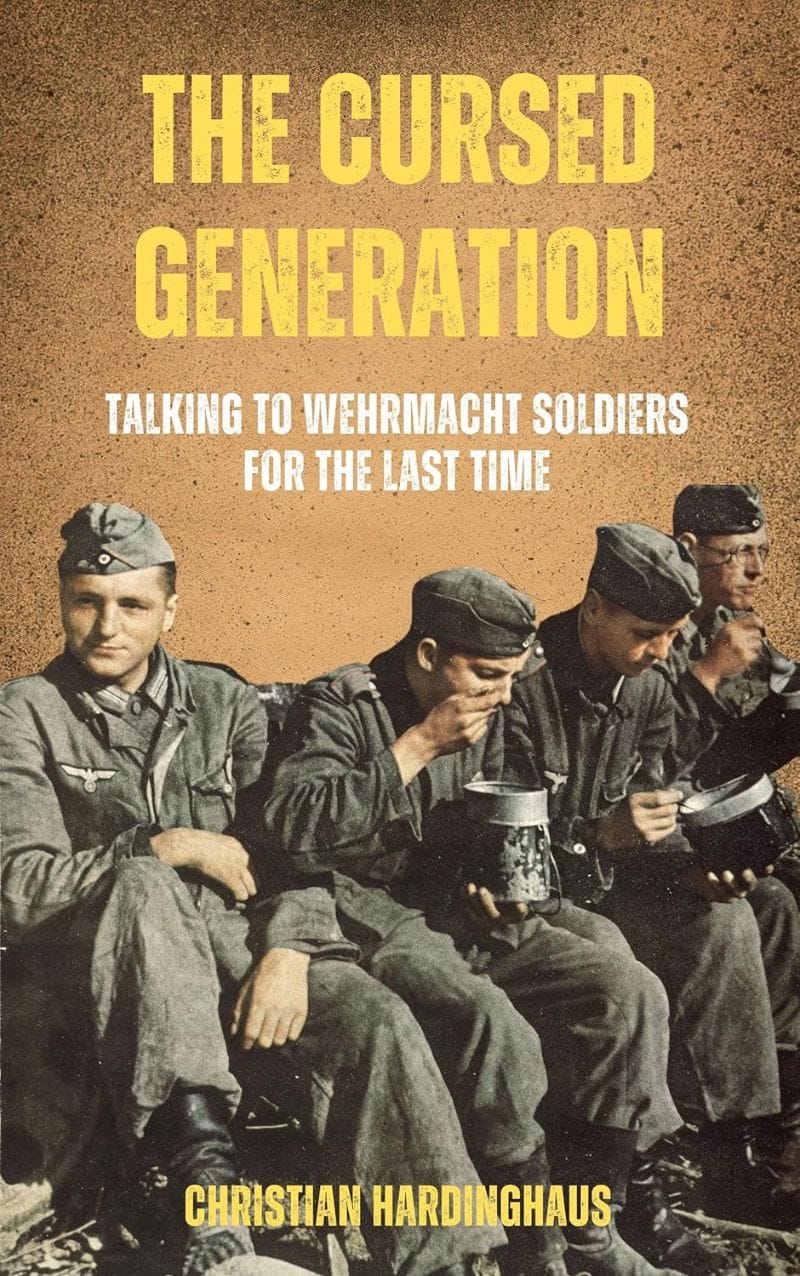

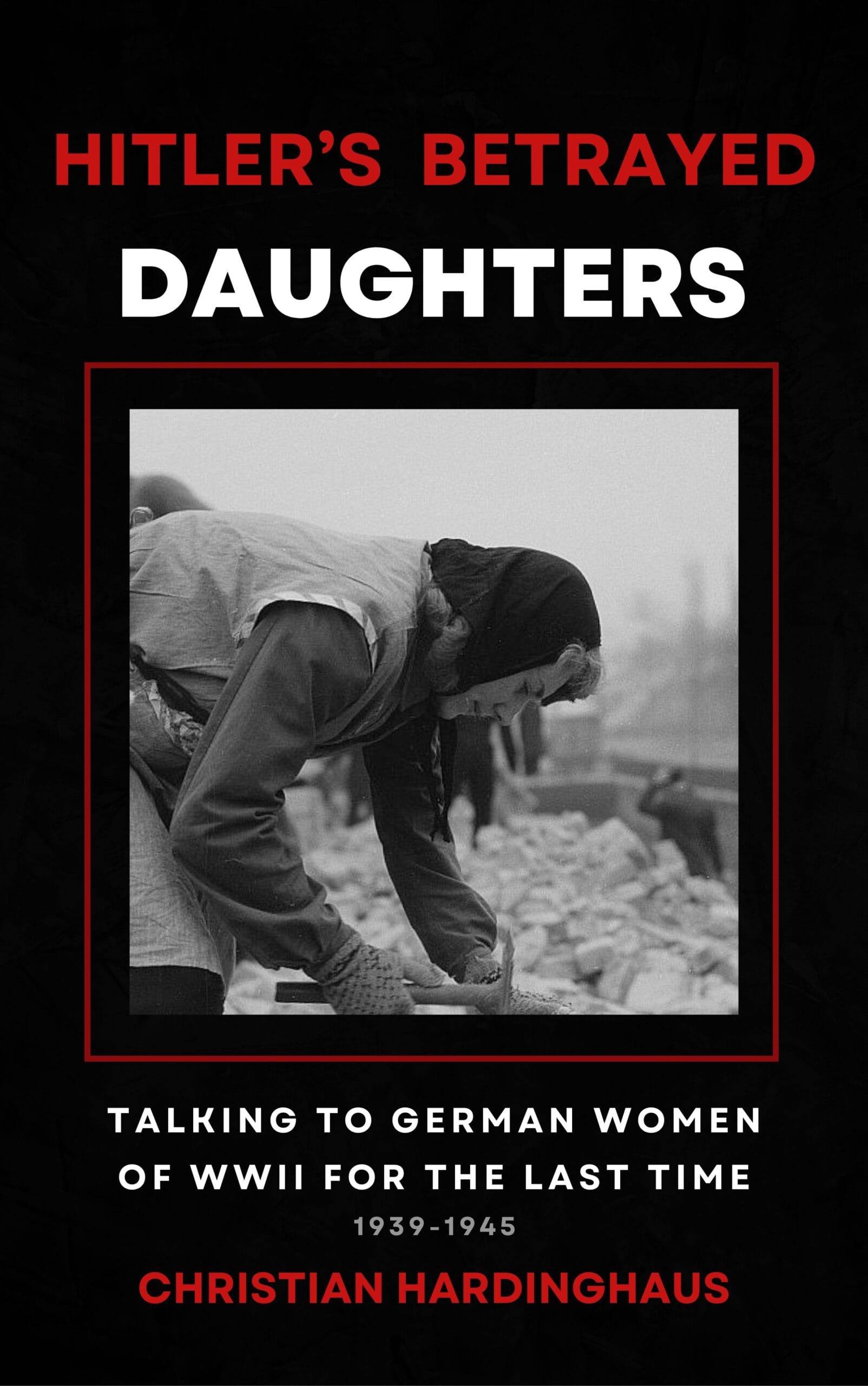
Between the Frontlines: untold stories and myth-checks
A blog series about the episodes that fall out of the textbooks — and about the wartime stories everybody repeats without checking. Each piece separates what the sources support from what has simply been passed along, and links back to the encyclopedias on this page. Read the whole series here.
The Fanta wartime invention
Trade embargoes cut Coca-Cola’s German subsidiary off from its syrup. What its chemists mixed instead, in 1940, out of whatever was left.
Read the myth-checkSoldatensender Calais
A German military radio station, accurate down to the football results, broadcasting from England. Black propaganda at its most convincing.
Read the storyCamp Ritchie and the Ritchie Boys
German-speaking refugees, many of them Jewish, trained in Maryland to interrogate the army they had fled.
Read the storyCharlie Chaplin and Hitler
Born four days apart, and one of them built a film out of the resemblance. What is documented, and what the anecdote industry added.
Read the myth-checkThe wolf children of East Prussia
Around 20,000 German children crossed into Lithuania alone after 1945, worked under false names and stayed silent for decades.
Read the historyPanzerschokolade and Pervitin
German troops really were issued methamphetamine. Whether it powered the Blitzkrieg is a different claim, and a weaker one.
Read the myth-checkWojtek the bear
A Syrian brown bear enlisted as a private in the Polish II Corps, and carried ammunition at Monte Cassino.
Read the story
Four reference works on the German war machine
Anyone reading a wartime document runs into abbreviations, ranks and institutions that nobody explains any more. These four encyclopedias do: what a term meant, where it sat in the hierarchy, and what it is often mistaken for.
Command & Compliance
Who gave the orders, and who carried them out. 125 organisations of the Nazi state — Wehrmacht, SS, NSDAP, ministries — with their remits, their rivalries and the gaps between them.
Third Reich organisationsRank & Reputation
137 ranks of the Wehrmacht, SS, SA and NSDAP, with side-by-side comparisons, collar patches and what each rank actually authorised its holder to do.
Wehrmacht and SS ranksCombat & Chains
73 unit types from squad to army group — Wehrmacht, Waffen-SS, SA, Hitler Youth and party formations — with strengths, chains of command and who answered to whom.
German military organisationColours & Corps
The Waffenfarben of the Wehrmacht and Waffen-SS: what a piping colour tells you about a man’s branch, and how to read it off a photograph.
Wehrmacht branch colours
How I work with these sources
Writing about the Nazi state means handling material that was produced to deceive, and testimony given by people with every reason to remember selectively. Three things keep that honest.
Documents alongside memory
Interviews are checked against service records, letters, photographs and published research. Where they contradict each other, the contradiction goes into the book.
Explained, not admired
Ranks, insignia and organisations are described because you cannot read a document without them — not because the apparatus that produced them deserves the attention.
Who is writing this
I hold a doctorate on wartime propaganda, work as a historian and media scholar, and have spent fifteen years recording the last generation that can still be asked.
The complete series
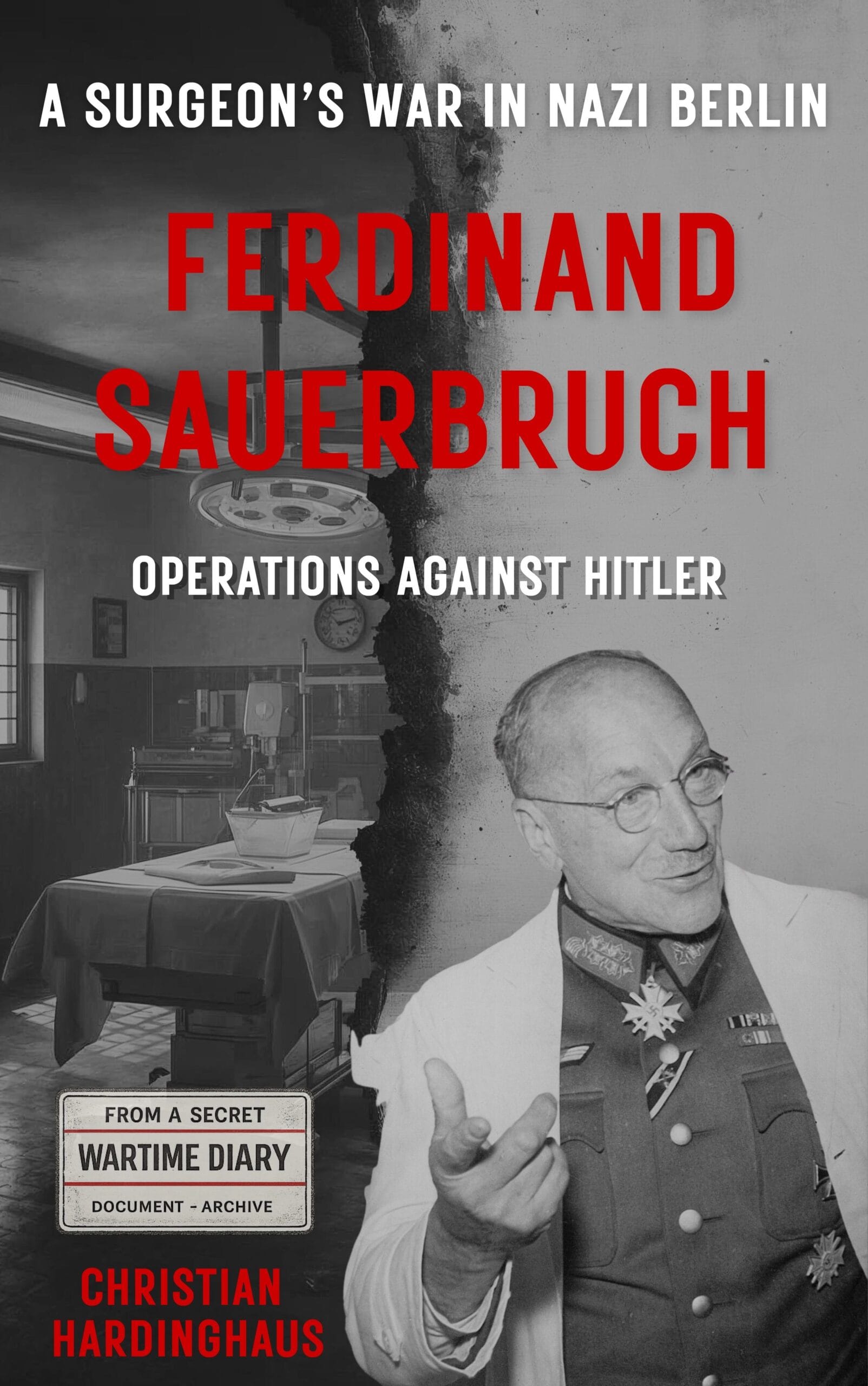
Six volumes, each built around people rather than operations: conscripted schoolboys, women in the war economy, a surgeon under political pressure, a child alone in the forests of Lithuania. The series page has the full descriptions and trailers.
On camera: an interview, a testimony, a trailer
Nothing loads from YouTube until you press play — the players below are placeholders, and no data reaches Google before you decide to start one. The language of each clip is stated, because two of the three are not in English.
Interview · English
Talking to Wehrmacht soldiers for the last time
Paul Woodadge of WW2TV asks me what a hundred interviews with former Wehrmacht soldiers actually produced: what men admitted after sixty years, what they left out, and how you check any of it.
Watch on YouTubeEyewitness · German
Rolf Sachweh: the Rheinwiesenlager
Rolf Sachweh, one of the men in Hitler’s Lost Boys, describes the weeks in the American prisoner enclosures on the Rhine meadows in spring 1945: no shelter, no latrines, and rain that did not stop.
Trailer · English
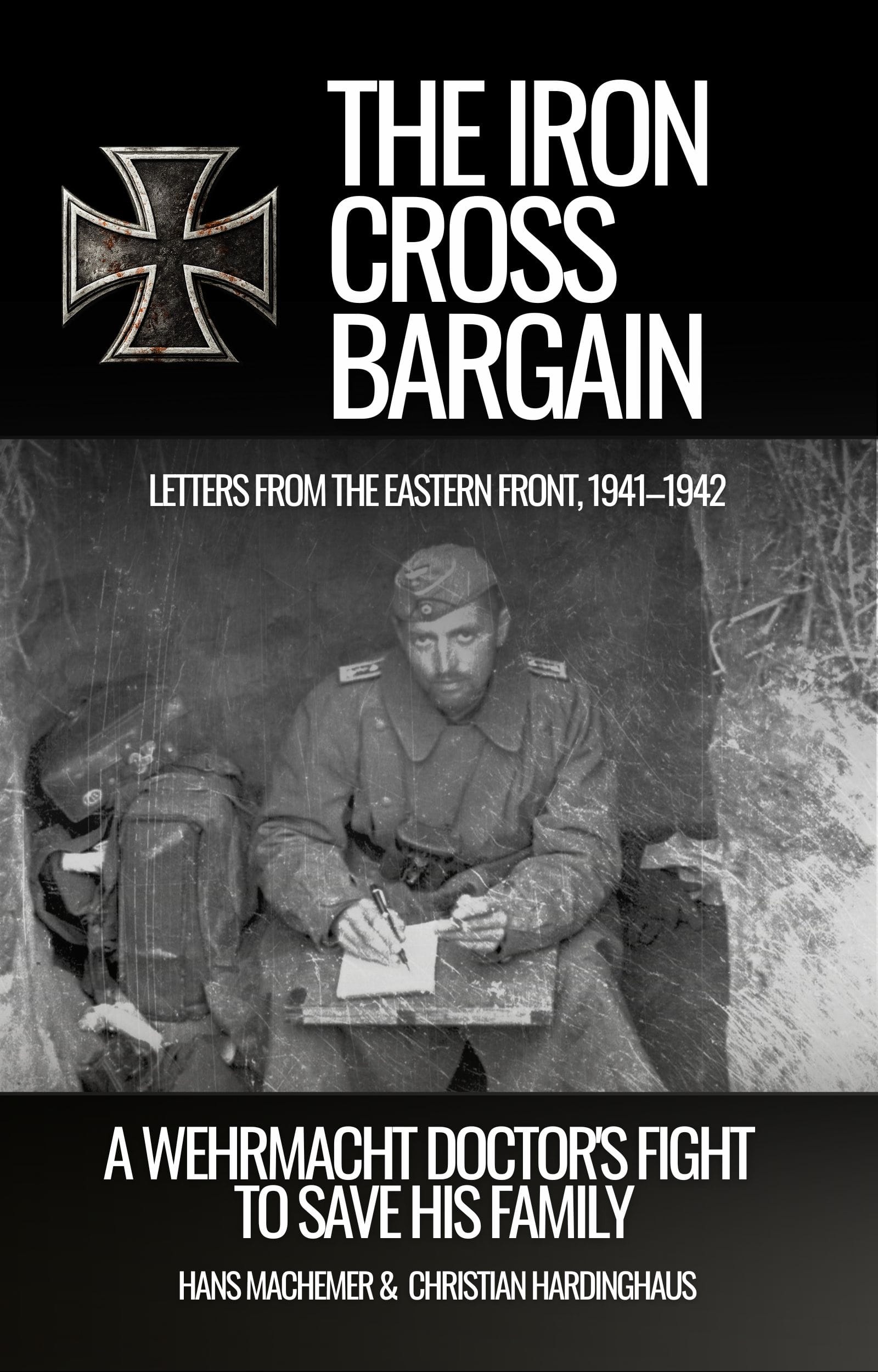
The Iron Cross Bargain
The photographs, letters and film that Helmut Machemer left behind — and the bargain he made with a regime that had declared his wife a liability.
Almost everyone I recorded between 2010 and 2020 has since died. Rolf Sachweh was ninety-one when he described the Rhine meadows; he could not have been asked five years later.
That is the whole reason these files exist. A transcript in a book can be checked, argued with and corrected. A conversation that never happened cannot.
Three books in detail
Three of the six volumes, with what is actually in them: how many people spoke, what survived in the family archives, and where the documents run out.

Last witnesses
Eyewitness testimony
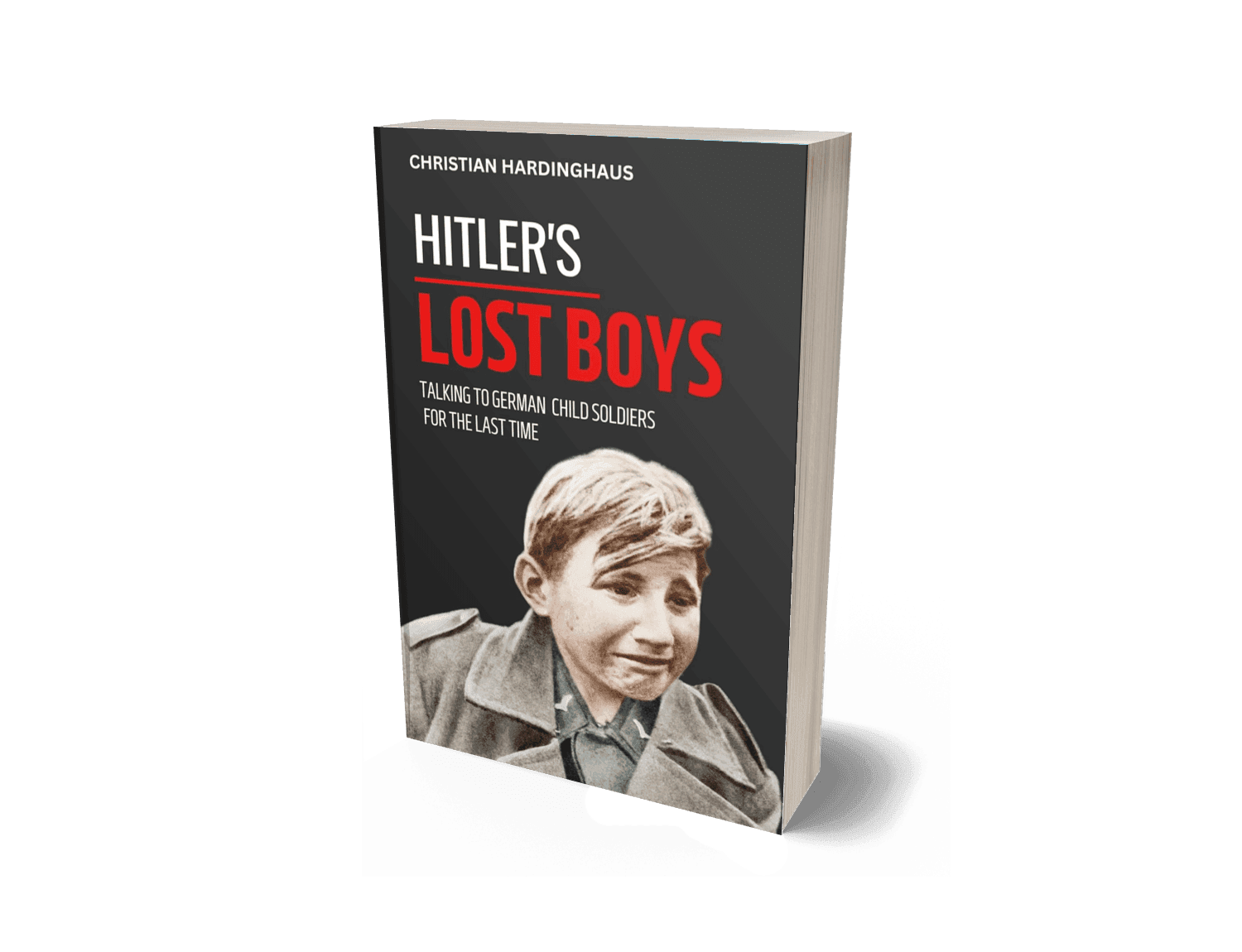
Hitler’s Lost Boys in WWII
Boys of fourteen and fifteen were sent against tanks in the last weeks of the war. Thirteen of the survivors told me what that was like.
On 20 April 1945, in the garden of the Reich Chancellery, Hitler made his last public appearance. Not with generals — with schoolboys, whom he decorated for destroying Soviet tanks. It was filmed, and it was the point of the film.
Raised on ten years of propaganda and handed a Panzerfaust, some of them still believed the war could be turned around. Most of them said nothing about it for the next sixty years. This book collects thirteen accounts — Luftwaffe auxiliaries, Volkssturm conscripts, tank-destroyer squads — alongside the photographs they kept.
Eleven of the thirteen men in this book have died since the interviews.
- 58 photographs
- 13 first-hand accounts

Wolf children
Biography
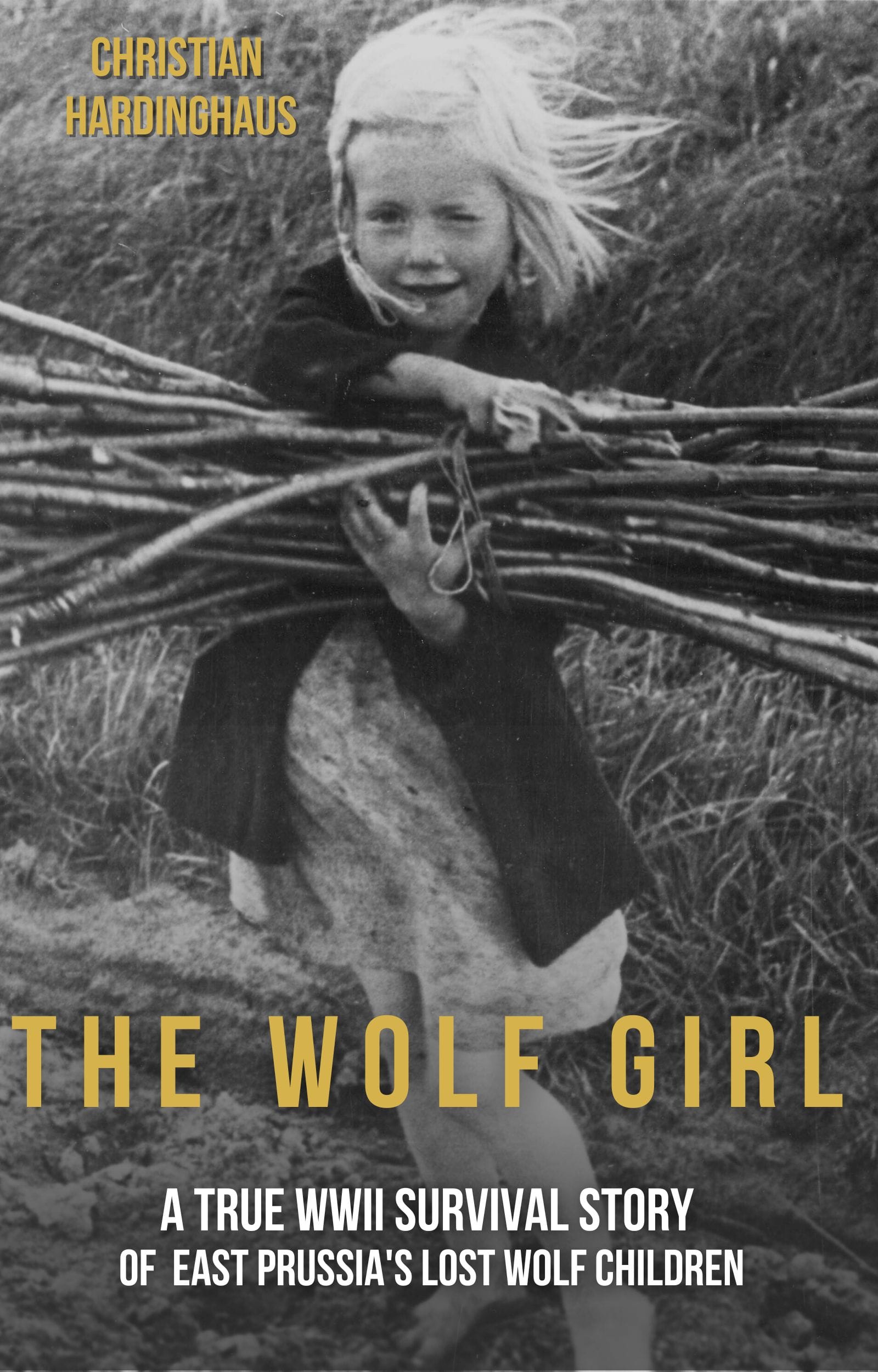
The Wolf Girl
Around 20,000 German children were left to themselves in East Prussia after 1945. Ursula Dorn was eleven when she became one of them.
In 1946 she crossed into Lithuania alone, begging and working on farms under a Lithuanian name, one of the children the Germans later called Wolfskinder. She did not speak about any of it for seventy years.
Her account is here as she gave it to me, checked against the records that exist for that region and those years — which is not many.
The first full account of a wolf child’s life to appear in English.
- First-person testimony
- Seventy years of silence
New release
Primary sources · true story
The Iron Cross Bargain
He volunteered on the first day of the war to protect his Jewish wife. The bargain worked. It cost him his life.
Dr Helmut Machemer was a physician, not a National Socialist. His wife Erna was classified as Halbjüdin, which put her and their children one bureaucratic decision away from deportation. His answer was to earn the Iron Cross at the front and petition Hitler personally for their exemption.
He received the Iron Cross First Class on 14 May 1942. Seven days later he was killed near Kharkiv. The exemption held, and his family survived the war.
Built from more than 160 letters, 2,000 photographs and the 8 mm film Helmut shot himself on the Eastern Front — kept in the family for eighty-four years.
- 80+ illustrations
- Document signed by Hitler
- Private film footage


Questions readers send me
What was the difference between the Wehrmacht and the Waffen-SS?
The Wehrmacht was the German state’s armed forces — army, navy and air force — with its own ranks, courts and chain of command running up to the High Command. The Waffen-SS was the armed branch of the SS, a party organisation: its ranks were SS ranks, its men swore their oath to Hitler personally, and its divisions were placed under army command in the field while remaining outside the army in every other respect.
The distinction matters for reading documents, and it is thinner than the post-war claim that the Wehrmacht was merely a professional army. Both are covered in Third Reich organisations.
How do I work out what a German rank meant?
Start with the branch, not the word. An SS-Sturmbannführer and a Wehrmacht Major sat at the same level on paper but commanded very different things, and NSDAP political ranks map onto neither. The rank encyclopedia lists 137 ranks side by side, with the insignia that go with them.
What did the Wehrmacht branch colours mean?
The Waffenfarbe — the piping on shoulder straps and collar patches — identified a soldier’s branch of service: white for infantry, pink for armoured troops, red for artillery, lemon yellow for signals, and so on. It is often the only thing in a photograph that tells you what a man actually did. Colours & Corps has the full chart.
How reliable is testimony recorded seventy years later?
Less reliable than a document for dates and numbers, and better than any document for what a situation felt like from inside it. Long-delayed memory compresses time, merges episodes and tends to place the speaker slightly to one side of what happened.
So I check names, units and dates against records, and where an account cannot be verified I say that in the text rather than quietly leaving it in.
Isn’t a German perspective on the war a way of excusing it?
It would be, if the perspective replaced the responsibility. It does not. Germany started the war and conducted it criminally; nothing in these books is set against that.
What the testimony adds is how an ordinary population was brought to take part — which is a question about propaganda, obedience and self-deception, and one worth being able to answer.
Where should I look for primary sources myself?
For German records, the Bundesarchiv in Berlin-Lichterfelde and Freiburg; for personnel files, the Deutsche Dienststelle records now held there as well. In English, the U.S. National Archives, the United States Holocaust Memorial Museum and the Imperial War Museums all have substantial digitised holdings, listed further down this page.
Where to go next
My own work first, then the archives and communities I use myself.
On this site
The series, the full catalogue, and the blog where the shorter pieces go.
Related hubs
The other two subjects I work on, both with their own reference works.
Archives & museums
Primary material, much of it digitised and free to search.
Where researchers argue
Moderated places where a badly sourced claim gets taken apart quickly.