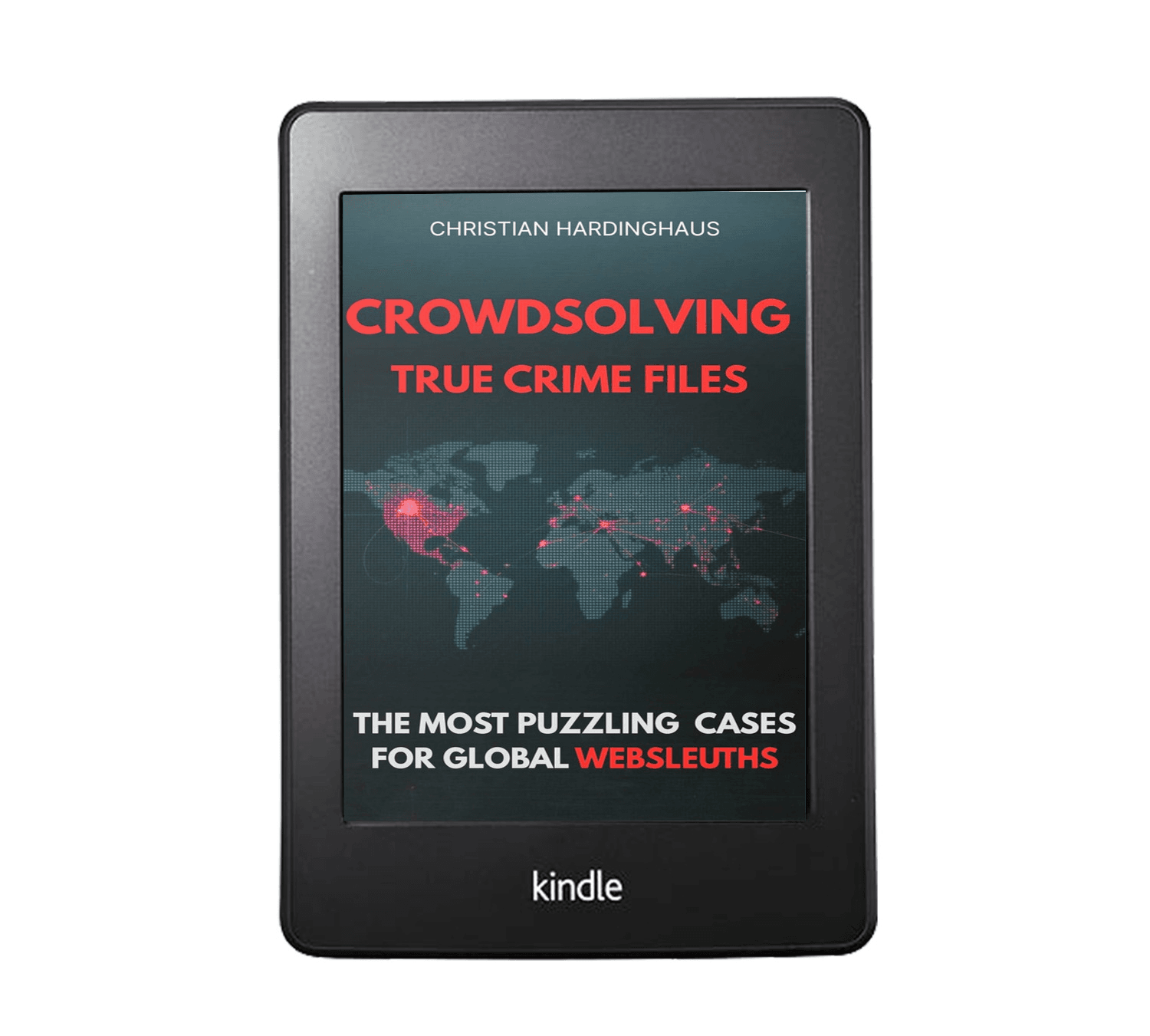

When millions of ordinary people become detectives overnight, everything changes.
In 2021, Gabby Petito disappeared during her Instagram-documented road trip. Within hours, millions transformed into amateur investigators. They found her body. They exposed police failures. They generated 1.2 billion TikTok views. This wasn't consumption—this was participation.
Now, a PhD historian reveals the full story of this revolution.
Drawing on sixteen unsolved mysteries spanning seven countries—from the 1959 Dyatlov Pass incident to today's most baffling disappearances—this groundbreaking guide exposes how websleuthing is transforming criminal investigation. Tracing true crime from ancient civilizations to modern podcasts, analyzing landmark works across every medium, it reveals the psychology behind our obsession, the successes where amateurs solved the unsolvable, and the dangers of digital vigilantism. With 250,000 unsolved US murders and nearly a million monthly websleuth forum visitors, traditional law enforcement can't keep up. But an army of digital detectives can.
This is documented investigation.
Join the search. The next breakthrough could be yours.
Crowdsolving True Crime Files. The Most Puzzling Criminal Cases for Global Websleuths
True Crime Psychology · Websleuthing · Cold Case Culture
Why true crime fascinates us — and how online sleuthing changed cold case culture
Crowdsolving True Crime Files explores the world of global websleuths through puzzling cold cases, digital detective work, true crime psychology and the ethical boundaries of online investigation.
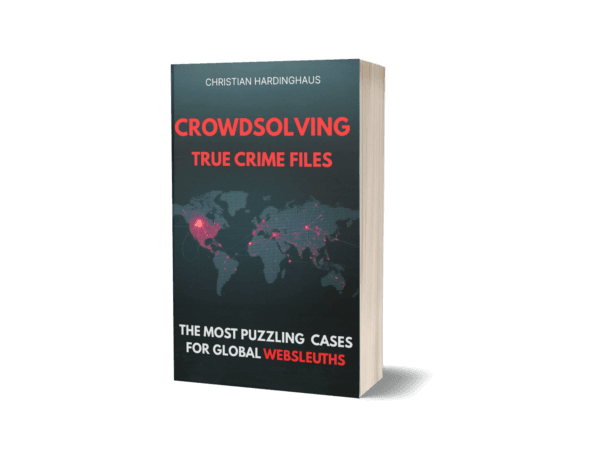
A Responsible Guide to Websleuthing True Crime
A critical look at online investigation, cold case fascination and the psychology behind true crime culture.
Global Cases
Countries
German Cold Cases
Websleuths
True crime has become more than a genre. It is a cultural phenomenon shaped by podcasts, documentaries, online communities and the belief that collective attention can sometimes help illuminate forgotten cases.
Crowdsolving True Crime Files examines this development through psychology, media history, international cold cases and the growing role of amateur online investigators. It asks not only why people are drawn to unsolved mysteries, but also where curiosity must give way to responsibility.
What the Book Covers
Psychology, history, case studies and the ethical toolkit behind digital detective work.
True crime psychology
Why people are drawn to danger, mystery, fear, justice and the search for narrative closure.
Websleuthing methods
How online communities gather, compare and interpret public information in missing-person and cold-case discussions.
Cold case ethics
A critical look at source verification, privacy, family impact, false suspicion and the line between help and harm.
International case studies
Eighteen puzzling cases across seven countries illustrate how mysteries evolve across cultures and media systems.
German cold cases
A bonus section introduces twenty German cold cases rarely discussed in English-language true crime culture.
True crime media history
From early crime narratives and detective fiction to television, podcasts, streaming platforms and TikTok-era investigations.
Case Types Featured
The book organizes unsolved mysteries by investigative challenge rather than spectacle.
Missing persons
Cases such as Maura Murray, Brian Shaffer, Lars Mittank, Asha Degree or Kris Kremers and Lisanne Froon show how quickly timelines become contested.
Mysterious deaths
Cases including Elisa Lam, Rey Rivera, Kendrick Johnson, Mitrice Richardson and Dyatlov Pass raise difficult questions about evidence and interpretation.
Unidentified persons
Jennifer Fergate, Peter Bergmann, the Isdal Woman and the Somerton Man illustrate the enduring challenge of identity.
Digital-era investigations
The book examines how online attention, social media, public databases and crowdsourced research reshape modern case discussion.
The Ethics of Online Investigation
Crowdsolving can help illuminate cases — but only when curiosity is governed by restraint.
Verify before sharing
The book stresses the difference between public information, rumor, assumption and evidence.
Do not accuse private persons
False accusations can damage lives, mislead investigations and turn victims’ stories into online spectacle.
Respect families and investigators
Responsible websleuthing means avoiding harassment, intrusion and interference with official work.
Remember the human beings
Every case involves victims, families and communities — not just clues, theories and timelines.
Short FAQ
Key questions for readers interested in true crime, websleuthing and cold cases.
What is websleuthing?
Websleuthing is the practice of using publicly available information, online communities and digital tools to discuss, research or support the understanding of unresolved cases. The book emphasizes responsible, ethical boundaries.
Is this a true crime casebook or a guide?
It is both. The book presents puzzling international cases while also explaining the psychology, history, media culture and ethics of digital detective work.
Which kinds of cases are covered?
The book covers missing persons, mysterious deaths, unidentified persons and digital-era cases, including 18 international cases across seven countries and a bonus section with 20 German cold cases.
Does the book discuss the risks of online investigation?
Yes. It discusses both the potential and the dangers of crowdsolving, including false accusations, speculation, harassment, privacy concerns and the difference between ethical research and vigilantism.
Available as
Read Crowdsolving True Crime Files as a paperback or Kindle edition.