

Dark City Explained: Ending, Plot Twist & Every Interpretation
A man wakes up naked in a hotel bathtub. A swinging lamp, a dead woman in the next room, a phone call urging him to run – and no memory of who he is. With this perfect noir opening, Alex Proyas throws us into Dark City, one of the most underrated mindfuck movies ever made. Rufus Sewell stumbles through a rain-slicked metropolis of eternal night, hunted by William Hurt’s melancholy detective and steered by Kiefer Sutherland’s twitching, whispering Dr. Schreber – while pale figures in black coats glide through the shadows.
On the surface, this is a murder mystery: did John Murdoch kill those women or not? But the longer you watch, the more the city itself becomes the suspect. Why is it always midnight? Why can nobody remember how to get to Shell Beach? Released a full year before The Matrix, Dark City asked the same questions first – and, I would argue, more elegantly. Below, we decode everything: the twist, the ending, and every serious way to read this film.
Director: Alex Proyas
With: Rufus Sewell, William Hurt, Kiefer Sutherland, Jennifer Connelly
Year: 1998 | Genre: Sci-Fi, Neo-Noir, Mystery, Thriller
Links: TMDB | IMDb | Encyclopedia entry
What Kind of Mindfuck Is This?
🧠 Category: Constructed Reality / False Memories 🌀 Twist intensity: 9/10 🔁 Rewatch value: 9/10
Dark City belongs to the royal class of mindfuck cinema: the constructed-reality film, crossed with a false-memory plot. The protagonist doesn’t just doubt his own mind – the world itself is the lie. What sets it apart from its famous successors is scale: here it is not one man’s memory that is unreliable, but an entire city’s. Every inhabitant is a test subject, and amnesia is not the exception. It is the operating system.
The Twist: What Actually Happens in Dark City
The city is not on Earth. It is a vast habitat drifting in space, built by the Strangers – a dying alien hive that inhabits human corpses. Every night at midnight they stop time, physically rearrange the buildings (“tuning”), and inject the sleeping population with freshly mixed identities and memories. A poor man goes to sleep and wakes up rich; a murderer wakes up innocent. The purpose: a grand experiment to isolate the human soul, the one thing the collective-minded Strangers lack. There is no Shell Beach, no sun, no way out – and John Murdoch never killed anyone. He is the anomaly: immune to the injections, awake during the tuning, and carrying the Strangers’ own psychokinetic power.
What makes the construction so elegant is how honestly the film plays with us. The clues are everywhere from minute one – the stopped clocks, the anachronistic mix of 1940s cars and 1950s diners, the fact that nobody can remember the last time they saw daylight. Proyas hides the reveal in plain sight and lets the noir conventions do the concealing: we accept eternal night because film noir has always been dark. The genre itself is the magician’s misdirection. In the finale, Murdoch defeats the Strangers, seizes control of their machine and remakes the city – tilting it toward a sunrise and building the Shell Beach he only knows from memories that were never his.
The Interpretations: 4 Ways to Read Dark City
Reading 1: Plato’s Cave in a Trench Coat
The most direct reading is epistemological. The citizens are prisoners in Plato’s cave: they mistake shadows (implanted memories) for reality and have no concept of the world outside. Murdoch is the freed prisoner who turns around and sees the fire – literally, when he breaks through the city wall and stares into open space. The film even stages the classic problem of the returning prisoner: when Murdoch tries to tell others the truth, Detective Walenski is the only one who believes him, and Walenski is considered insane. Knowledge of the construct is indistinguishable from madness inside the construct.
Reading 2: The Gnostic Gospel of John (Murdoch)
Dark City is one of cinema’s purest Gnostic parables. In Gnostic cosmology, the material world is a flawed prison created not by God but by a lesser, blind creator – the demiurge – and administered by archons. The Strangers map perfectly onto the archons: pale bureaucrats of a false reality who fear the divine spark (the soul) hidden in humans. Dr. Schreber is the classic intermediary figure who serves the archons but secretly aids the redeemer. And Murdoch is the Gnostic saviour: he attains gnosis (knowledge of the world’s true nature), awakens powers that match the creators’ own, and ends the film not by escaping the material world but by remaking it with light. Even his name plays along: John – the evangelist of light versus darkness.
Reading 3: You Are Not Your Memories
The Strangers’ experiment rests on one assumption: that identity is the sum of memory. Swap the memories, and you swap the person – if a banker injected with a murderer’s past kills, then the soul doesn’t exist. The film’s answer is a firm no. Murdoch, implanted with a serial killer’s memories, refuses to kill. Emma, rewritten into “Anna” with her love for John erased, still gravitates toward him at Shell Beach. Something persists beneath the biography – call it soul, disposition, or moral core. This is the film’s emotional thesis and its most quietly radical idea: the Strangers lose not because Murdoch is stronger, but because their materialist theory of the self is simply wrong.
Reading 4: The Meta-Reading – Filmmakers as Strangers
Finally, the self-referential layer. What do the Strangers do every midnight? They build sets, rearrange props, write backstories and implant them into unsuspecting minds – they are a film crew, and the citizens are the audience. “Tuning” is editing; Schreber’s syringe is exposition. The film’s own production history turned this reading into an involuntary punchline: the studio, worried audiences wouldn’t understand, forced an opening narration onto the theatrical cut that explains the Strangers upfront – spoiling the entire mystery before the first scene. A nervous studio injecting explanatory memories into the audience’s head: the Strangers could not have done it better. Proyas removed the narration in his 2008 Director’s Cut, which is the version I recommend without reservation.
How to Decode It: 6 Clues You Probably Missed
- Schreber’s diner question. “When was the last time you remember doing something during the day?” The film states its central anomaly out loud in the first act – and like Murdoch, we can’t answer.
- Shell Beach is everywhere and nowhere. Billboards, postcards, everyone’s childhood memories – yet no one can name the way there. Watch the automat scene: two people give directions that cancel each other out mid-sentence.
- Walenski’s spirals. The “mad” detective covers his walls in spirals – the shape of a maze with no exit. His subway line before stepping onto the tracks: “There is no way out. Not for any of us.” He is the only sane man in the city.
- The rat maze. Schreber’s lab experiment with the rat mirrors the city’s architecture. The Strangers even move their test subject’s walls – exactly what happens to Murdoch when staircases and doorways rearrange around him.
- The era that never was. 1940s cars, 1950s automats, Victorian architecture, no consistent decade anywhere. The city is collaged from borrowed human memories – it has a mood, but no history.
- Stopped clocks at midnight. Every tuning is announced by clock faces and the city literally holding its breath. Once you know, the first tuning scene plays like an open confession.
If You Liked Dark City, Watch These Next
- The Matrix (1999)The famous sibling: same prison-reality premise, one year later, answered with action instead of noir.
- The Thirteenth Floor (1999)Noir meets simulated worlds – the third film of the 1998/99 constructed-reality wave.
- The Truman Show (1998)Same year, same idea in daylight: one man’s world as someone else’s controlled experiment.
- Inception (2010)Folding cityscapes and implanted ideas – Nolan’s blockbuster heir to the tuning scenes.
Hungry for more twists? Browse all 180+ Mindfuck Movies with shocking plot twists explained in the encyclopedia.
Movies manipulate you by design – real propaganda does it for power. Learn how in my Manipulation & Propaganda Encyclopedia, and find captivating true crime stories on Between the Lines.
Love a Good Twist? These Are Mine.
Dark City runs on manufactured identities: people living lives that were written for them, never suspecting a thing. That is not just science fiction – it is the daily business of espionage. My thrillers are built on exactly this material, and on true events.

The Charité Spy
WWII spy thriller based on true events – packed with twists nobody sees coming. Part of the Cities of Shadow series.
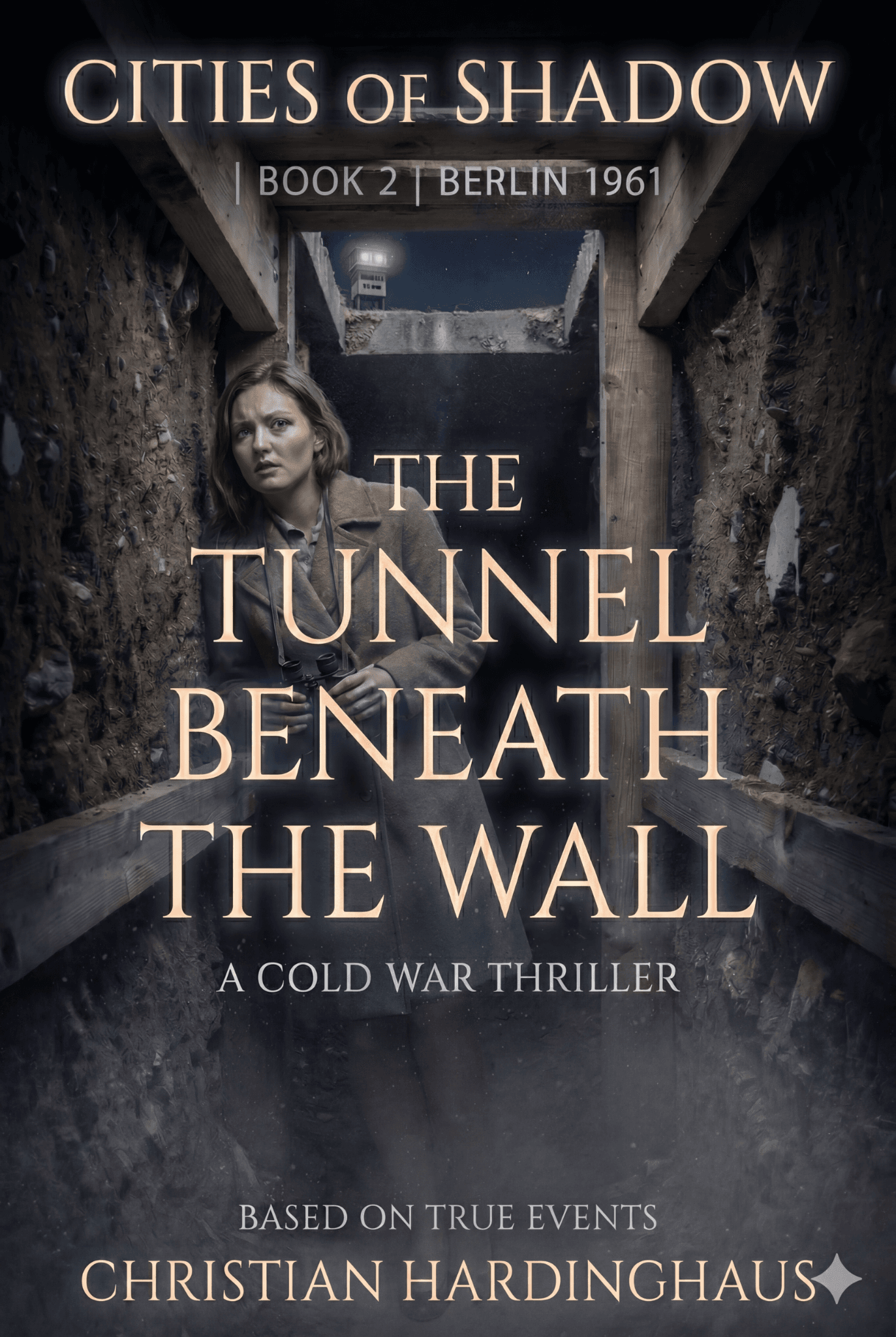
The Tunnel Beneath the Wall
Berlin Wall thriller, 1961 – betrayal, tunnels and a final twist that recontextualizes everything. Cities of Shadow, Book 2.
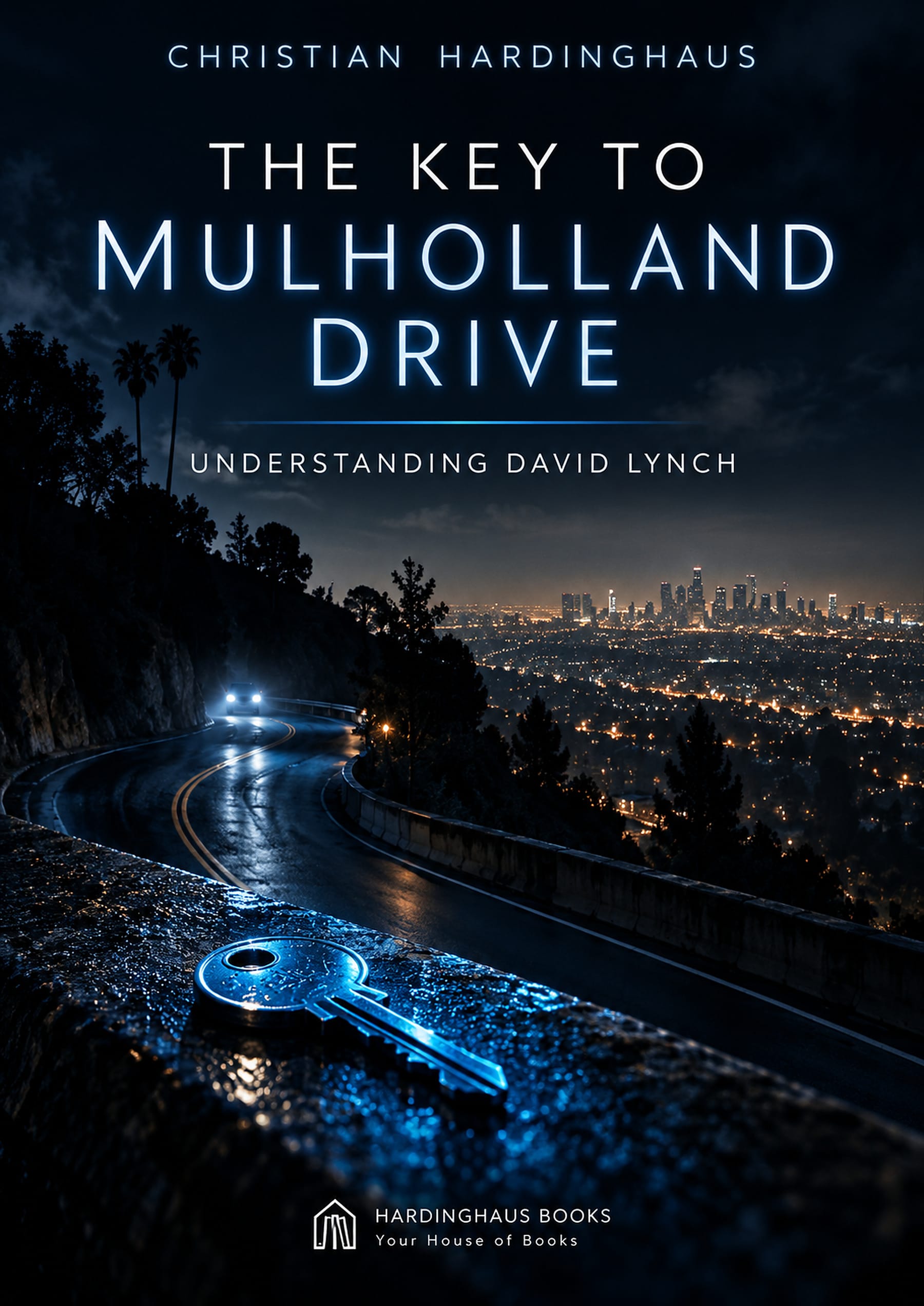
The Key to Mulholland Drive
My full film analysis of David Lynch’s masterpiece – the ultimate mindfuck, finally explained.
So – which reading do you believe? Is Dark City a Gnostic parable, Plato with fedoras, or simply the best argument ever filmed that you are more than your memories? Tell me in the comments. And sleep well tonight… it’s almost midnight. More mindfuck cinema, decoded, in my Between the Frames series on Between the Lines.

One thought on “Dark City Explained: Ending, Plot Twist & Every Interpretation”
Hello Sir.
I’ve solved this film if you’re interested in knowing more, perhaps we could make a negotiation?
Essentially the world knows nothing about this film.
There is a sun by the way, but it’s being controlled, in the boat scene the doctor said they manipulate it because they don’t like it.
Did you ever wonder why the Strangers are all men?
The constant theme of “Around and around it goes, where it stops nobody knows actually doesn’t have anything to do with the fact they’re trapped, it’s because there is an infinite loop happening that only I discovered that the whole film revolves around.
Are you so sure he isn’t a killer?
Comments are closed.