

Untold Stories, Hidden Facts & Curiosities of World War II — What’s Not in the Textbooks · by Dr. Christian Hardinghaus
The Wolf Children of East Prussia: 20,000 German Children History Forgot
After the fall of East Prussia, thousands of orphaned children vanished into the forests — and stayed silent for half a century.
February 1946. An eleven-year-old girl climbs onto the buffers of a Soviet freight train leaving the ruins of Königsberg. She has no papers, no food, and one instruction that will govern the rest of her childhood: never, ever tell anyone you are German.
01The Story
When the Red Army cut off East Prussia in early 1945, the German evacuation collapsed into chaos. Hundreds of thousands of civilians fled west across frozen lagoons under fire; hundreds of thousands more were trapped. In the starvation winters that followed in Soviet-occupied Königsberg, disease and famine did what the fighting had not finished. Left behind was a group nobody had planned for: children whose parents were dead, deported, or simply gone.
Estimates suggest up to 20,000–25,000 of these children roamed the region after 1945. They walked or rode freight trains across the Memel River into Lithuania, begging and working on farms for bread. Lithuanian villagers called them vokietukai — “little Germans” — and, because of the way they moved through the woods in small packs, vilko vaikai: wolf children.
Survival meant disappearance. Lithuanian families who sheltered German children risked Soviet punishment, so the children took new names, learned Lithuanian, and buried their origins. By 1948, an estimated 5,000 German children were still living in Lithuania under borrowed identities. Many never recovered their real names, birthdays, or families.
02Why It’s Not in the Textbooks
Three silences stacked on top of each other. In the Soviet Union, a hidden German identity remained a liability for decades — the wolf children stayed invisible because visibility was dangerous. In Germany, the suffering of German civilians was long a fraught subject: historians and the public alike feared that telling these stories could relativize German guilt, so they were left largely to expellee organizations — which made mainstream research even more hesitant. And the children themselves, traumatized and often robbed of their own language, simply did not speak.
Only after Lithuania regained independence in 1991 did surviving wolf children begin to organize and testify — elderly people who had spent their whole lives as Lithuanians with a German childhood locked inside them. By then, the story had missed its place in the textbooks by two generations.
✚Myth-Check
The claim: “The Nazi leadership evacuated East Prussia’s civilians in time.”
The opposite is documented. Gauleiter Erich Koch banned early evacuation as “defeatism” and kept the propaganda line that East Prussia would hold — until the Red Army was already inside the province. Civilians who fled without permission faced punishment; the ordered evacuation came days too late, in the middle of a January offensive. Koch himself escaped west by ship. The wolf children are, in part, the direct consequence of that propaganda decision.
Verdict: MYTH
🗂 Decode This File
- Gauleiter → Command & Compliance — Nazi State Organizations
- Volkssturm → Combat & Chains — Units & Organization
- NSV (Nazi welfare organization) → Command & Compliance — Nazi State Organizations
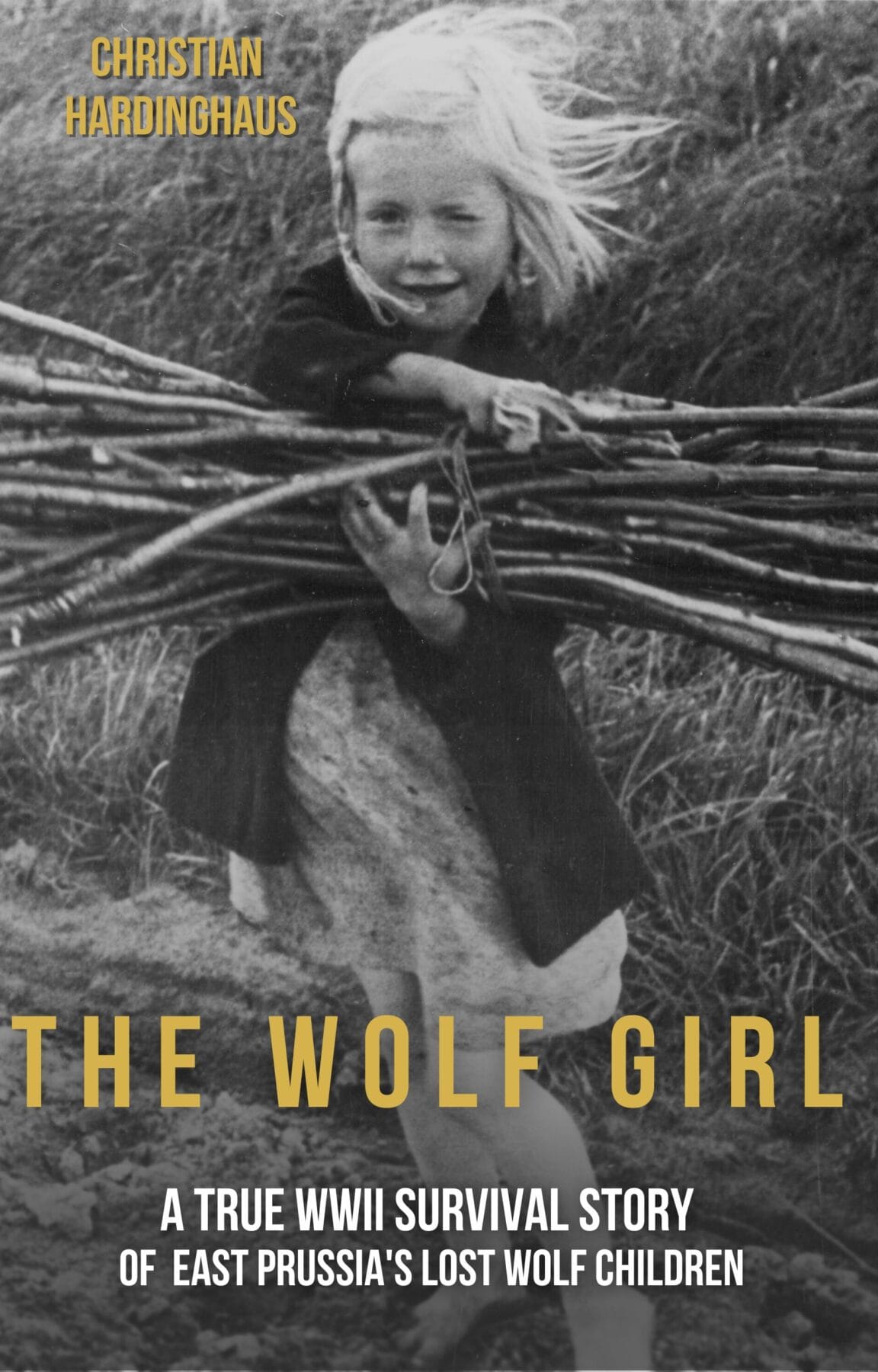
The Wolf Girl — World War II From a German Point of View, Vol. 4
This file is built on my interviews with Ursula Dorn, who fled Königsberg alone at age eleven and survived as a wolf child in Soviet-occupied Lithuania. She kept silent for seventy years — her full testimony, documented and historically contextualized, is in this book.
Get on Amazon Book Details03Sources & Further Reading
- Hardinghaus, C.: The Wolf Girl. A True WWII Survival Story of East Prussia’s Lost Wolf Children (2025) — based on interviews with Ursula Dorn.
- Leiserowitz (Kibelka), R.: Wolfskinder. Grenzgänger an der Memel (Basisdruck, 1996/2003).
- Winterberg, S. / Weber, K.: Wir sind die Wolfskinder. Verlassen in Ostpreußen (Piper, 2012).
- Testimonies collected by the Lithuanian wolf children association “Edelweiss” (est. 1991).