
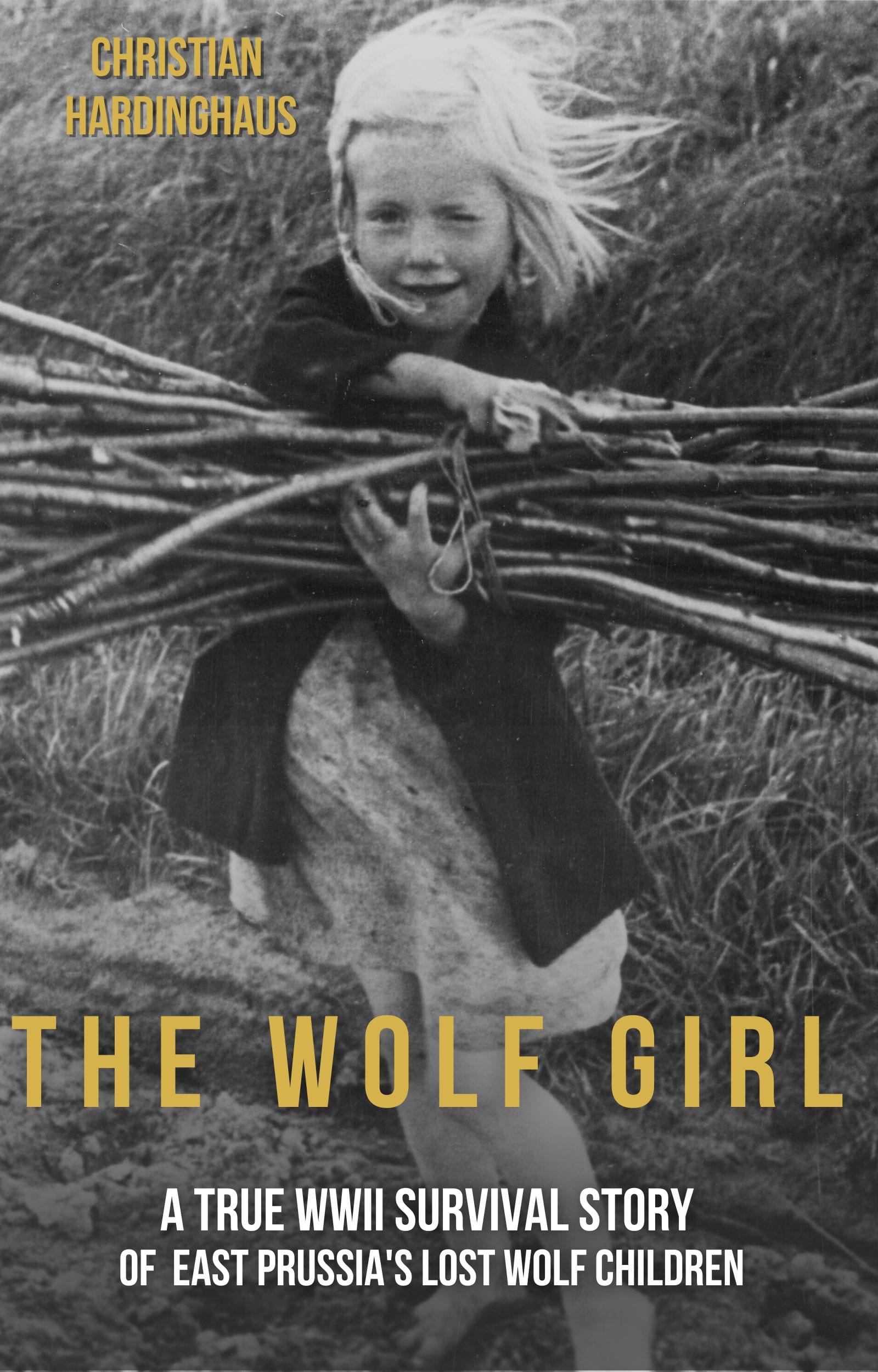
Twenty thousand children vanished after WWII ended—she was one of them.
In 1946, eleven-year-old Ursula Dorn made a choice no child should face: stay in Soviet-occupied Königsberg and starve, or flee alone into a war-torn wilderness where 20,000 orphaned German children roamed like ghosts. She chose survival. Smuggling herself aboard a Russian freight train to Lithuania, Ursula became one of the "Wolfskinder"—wolf children—forced to adopt false identities, speak new languages, and hide in forests where partisan gunfire echoed nightly. Discovery meant deportation to Siberian labor camps. Trust meant death. For 70 years, she kept silent. Now 90, Ursula breaks that silence in this searing firsthand account documented by renowned WWII historian Christian Hardinghaus. This is verified testimony from the last witnesses.
Discover the children history left behind—before their voices disappear forever.
The Wolf Girl : A True WWII Survival Story of East Prussia’s Lost Wolf Children
WWII Survival Memoir · East Prussia · Wolfskinder · Book 4
A true WWII survival story of East Prussia’s lost wolf children
The Wolf Girl tells the true story of Ursula Dorn, an eleven-year-old girl who fled the ruins of Königsberg in 1946 and survived as one of East Prussia’s forgotten wolf children in Soviet-occupied Lithuania.
A True WWII Survival Story
The forgotten postwar world of East Prussia’s wolf children — told through Ursula Dorn’s testimony.
Ursula’s Escape
Lost Children
Perished
Shelter & Danger
In February 1946, eleven-year-old Ursula Dorn made a decision that would save her life and haunt her forever. Leaving her family behind in the ruins of Königsberg, she fled starvation in Soviet-occupied East Prussia and smuggled herself aboard a train to Lithuania.
There, German children survived by disappearing. They adopted Lithuanian names, hid their origins, worked for food, slept in barns and forests, and learned to vanish whenever Soviet patrols approached. Locals called them Wolfskinder — wolf children.
Königsberg after the war
The memoir begins in a collapsed province where hunger, disease and violence turned childhood into a daily struggle for survival.
Flight to Lithuania
Ursula’s route leads into Soviet-occupied Lithuania, where local families sometimes risked punishment to shelter starving German children.
A hidden identity
Survival meant silence, new names, new language and the painful erasure of a German childhood that could no longer be spoken aloud.
Ursula Dorn’s Path
A child’s path through hunger, flight, concealment and decades of silence.
Short FAQ
Key questions about the wolf children of East Prussia and Ursula Dorn’s testimony.
Who were the wolf children?
The wolf children, or Wolfskinder, were mostly German-origin children from East Prussia who fled hunger and displacement after World War II, often crossing into Lithuania and hiding their identities to survive.
Why did children flee to Lithuania?
After Königsberg’s collapse, many children faced starvation in East Prussia. Lithuania offered a chance of food, work or shelter, though helping German children could expose local families to Soviet punishment.
Is this memoir historically grounded?
Yes. The book is based on extensive interviews with Ursula Dorn and historical contextualization by Christian Hardinghaus, whose work focuses on eyewitness testimony and source-based World War II history.
Why did many survivors remain silent?
Many survivors carried trauma, shame, fear and fragmented identities for decades. In Soviet-controlled contexts, admitting German origin could be dangerous, and even later many witnesses struggled to speak about what they had endured.
Series Trailer
World War II from a German Point of View — the broader historical series behind this book.
Available as
Read The Wolf Girl as a paperback or Kindle edition.
Read sample
· Goodreads
· About Christian Hardinghaus
· All English books