

Mulholland Drive (2001) Explained: Ending, Dream Theory & Every Interpretation
A car crash in the Hollywood Hills. A dark-haired woman who can’t remember her own name. A bright-eyed blonde from Deep River, Ontario, who arrives in Los Angeles to become a star. And a man behind a diner whose face is so terrifying that simply seeing it can kill you. David Lynch’s Mulholland Drive has been voted the greatest film of the 21st century in a major BBC critics’ poll – and it is almost certainly the most argued-about. Naomi Watts plays Betty, Laura Harring plays Rita, and Justin Theroux plays a director whose movie is suddenly hijacked by forces he can’t see.
If you just finished it and your head is spinning, you’re in good company. What is the blue box? Who is Diane Selwyn? What happens at Club Silencio? Why does everyone suddenly have a different name? This Mulholland Drive ending explained guide separates dream from reality, walks through Lynch’s famous 10 clues and tests every major interpretation. I’ve spent years with this film – enough to write an entire book about it.
Writer & Director: David Lynch
With: Naomi Watts, Laura Harring, Justin Theroux, Ann Miller, Robert Forster, Melissa George
Year: 2001 | Genre: Neo-Noir, Mystery, Psychological Thriller, Drama
Links: TMDB | IMDb | Encyclopedia entry
What Kind of Mindfuck Is This?
🧠 Category: Dream logic / split identity / unreliable reality 🌀 Twist intensity: 10/10 🔁 Rewatch value: 10/10
Mulholland Drive doesn’t have a twist so much as a fracture. For about two hours, it plays like a Hollywood mystery with a love story at its heart. Then a small blue box opens – and everything you’ve watched snaps into a different shape. The film isn’t asking you to solve a puzzle. It’s asking you to figure out who is dreaming, and why.
Mulholland Drive Ending Explained: What Really Happens
The most widely accepted – and best supported – reading: most of the film is Diane Selwyn’s dream. Diane is a struggling actress who came to Los Angeles after winning a jitterbug contest and inheriting money from her aunt. She fell in love with Camilla Rhodes, a rising star. Camilla dumped her and is about to marry director Adam Kesher. Humiliated and consumed by jealousy, Diane hires a hitman at Winkie’s diner. He shows her a blue key: when she finds it, the job is done.
In her dream, Diane rewrites her life. She becomes “Betty,” talented, innocent and on the verge of a breakthrough. Camilla becomes “Rita,” helpless, amnesiac and completely dependent on Betty. Adam is forced by shadowy powers to cast another woman – Diane’s way of explaining her own failure. But guilt keeps seeping in: the rotting body in Diane’s apartment, the man behind Winkie’s, Club Silencio. When Rita opens the blue box with the blue key, the dream collapses. The Cowboy tells her it’s time to wake up – and Diane wakes in her apartment. The blue key sits on the coffee table. Camilla is dead. Haunted by guilt and hallucinations, Diane shoots herself.
What makes this so brilliant is that the dream follows real dream logic: people from Diane’s life reappear in new roles. The real waitress at Winkie’s is named “Betty”; in the dream, the waitress’s name tag reads “Diane.” The blonde who kisses Camilla at the party becomes the “Camilla Rhodes” that Adam is forced to cast. Adam’s mother Coco becomes the kindly landlady. The elderly couple who see Betty off at the airport come from the jitterbug triumph – and return at the end as a nightmare. Nothing in the dream is invented. Everything is displaced.
What Does Mulholland Drive Mean? 4 Interpretations Tested
Reading 1: The Dream Theory – Wish Fulfillment and Guilt
The dream theory isn’t just the most popular reading; it’s the one that explains the most details. The dream follows Freud’s idea of wish fulfillment: Diane dreams herself as the woman she wanted to be, and Camilla as the woman she needed her to be. At the same time, her guilty conscience fights back. The search for “Diane Selwyn” is Diane’s search for herself – and it ends in front of her own corpse. The dream knows exactly what the dreamer is trying to bury.
Reading 2: Hollywood as the Dream Factory
Lynch is also delivering a savage satire of Hollywood. In the dream, the movie business is run by mobsters, a man in a wheelchair behind glass and a mysterious Cowboy. That’s Diane’s alibi: it wasn’t a lack of talent that killed her career, it was a conspiracy. At the same time, the film shows how Los Angeles manufactures dreams and then devours the dreamers. Betty arrives like the heroine of an old studio picture. Diane ends up alone, broke and desperate – the flip side of the very same story.
Reading 3: Club Silencio – It’s All a Recording
The Club Silencio scene is the key to the entire film. The emcee announces that there is no band, that everything is pre-recorded – and still we let ourselves be fooled. Then Rebekah Del Rio sings “Llorando,” collapses, and her voice keeps going. Betty and Rita weep, even though they’ve just been told it’s all an illusion. That is cinema in a nutshell. And it’s Diane’s dream, too: an illusion that feels real until someone cuts the sound. Seconds later, the blue box appears.
Reading 4: Two Women, One Identity
Another reading focuses on the motif of merging identities. When Rita puts on a blonde wig, she suddenly looks almost exactly like Betty – a deliberate nod to Ingmar Bergman’s Persona. Betty and Rita are two halves of one desire: the self Diane wanted to be and the woman she wanted to possess. That’s why having her lover killed is ultimately an act of self-destruction. Destroy the other half, and you can’t survive either.
David Lynch’s 10 Clues to Mulholland Drive – Decoded
Lynch famously refused to explain his film. But for the DVD release, he included a card with ten clues. Here they are, paraphrased – along with what they reveal:
- 1. Pay attention at the beginning – at least two clues appear before the credits. The jitterbug contest shows Diane’s triumph. The camera sinking into a pillow shows someone falling asleep. The dream begins.
- 2. Notice the red lampshade. It sits beside the conspirators’ telephones and in Diane’s apartment – a bridge between dream and reality.
- 3. Can you hear the title of the film Adam Kesher is casting? “The Sylvia North Story.” It’s mentioned in both worlds – the film that made Camilla’s career and ended Diane’s.
- 4. An accident is a terrible event – notice where it happens. The crash occurs at the exact spot on Mulholland Drive where, in reality, the limo stops on the way to Adam’s party.
- 5. Who gives a key, and why? The hitman – as proof that Camilla is dead.
- 6. Notice the robe, the ashtray, the coffee cup. Objects from Diane’s real life that resurface inside the dream.
- 7. What is felt, realized and gathered at Club Silencio? The realization that everything is an illusion – the start of waking up.
- 8. Did talent alone help Camilla? Not in Diane’s eyes – hence the casting conspiracy in the dream.
- 9. Note what surrounds the man behind Winkie’s. He embodies Diane’s guilt and fear – and in the end, he’s holding the blue box.
- 10. Where is Aunt Ruth? Dead. Her inheritance brought Diane to Los Angeles. In the dream, she’s merely “out of town.”
If You Liked Mulholland Drive, Watch These Next
Its closest relative is Lynch’s own Lost Highway – another story of a man escaping his guilt into a new identity. Here’s my full breakdown.
- Lost Highway (1997)Lynch’s sister film: an identity switch as an escape from an unbearable crime.
- Inland Empire (2006)Lynch’s most radical Hollywood nightmare – an actress lost inside her role.
- Perfect Blue (1997)Anime masterpiece about fame, identity loss and a reality that falls apart.
- Enemy (2013)Doppelgängers, desire and a city that feels like a dream.
Hungry for more twists? Browse all 180+ Mindfuck Movies with shocking plot twists explained in the encyclopedia.
Movies manipulate you by design – real propaganda does it for power. Learn how in my Manipulation & Propaganda Encyclopedia, and find captivating true crime stories on Between the Lines.
The Full Decoding: My Book on Mulholland Drive
This article only scratches the surface. In The Key to Mulholland Drive, I go through the film scene by scene – every character, every symbol, every shift between dream and reality. If Mulholland Drive won’t let you go, this is your next step.
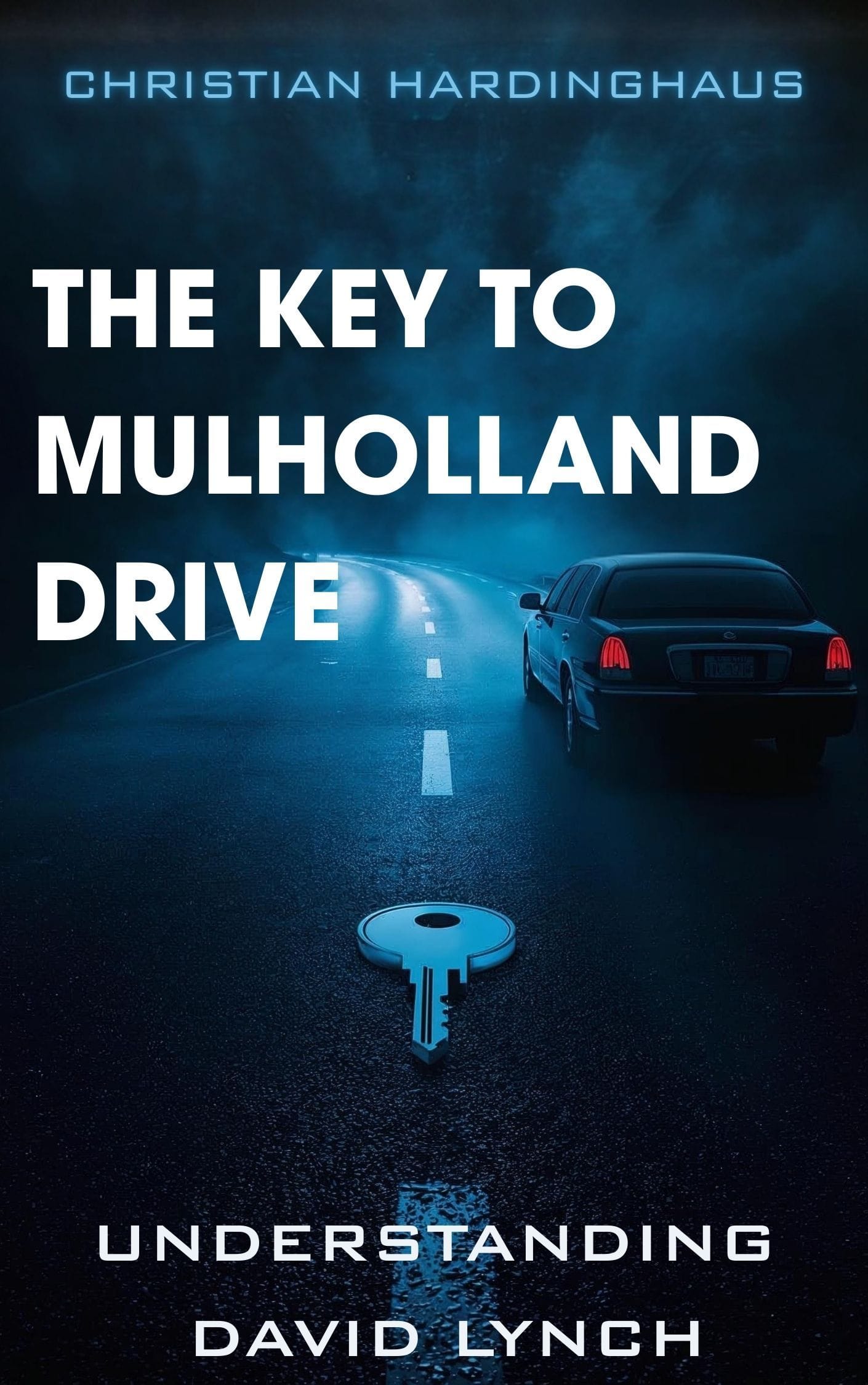
The Key to Mulholland Drive
My full film analysis of David Lynch’s masterpiece – the ultimate mindfuck, finally explained.
The Charité Spy
WWII spy thriller based on true events – packed with twists nobody sees coming. Part of the Cities of Shadow series.
Mulholland Drive FAQ
What is the ending of Mulholland Drive about?
The ending reveals the reality behind the dream: Diane Selwyn had her former lover Camilla Rhodes killed out of jealousy. The blue key confirms the murder. Tormented by guilt and hallucinations, Diane takes her own life. The final whisper at Club Silencio – “Silencio” – ends the illusion.
What does the blue box mean in Mulholland Drive?
The blue box is the threshold between dream and reality. It matches the blue key, the sign of Camilla’s death. Once it’s opened, Diane can no longer repress the truth – and the dream falls apart.
Who is the man behind Winkie’s?
The grimy figure behind the diner embodies Diane’s repressed guilt and fear. He appears where Diane ordered the murder, and in the end he holds the blue box.
Are Betty and Diane the same person?
Yes. Betty is Diane’s dream self: talented, optimistic and innocent. Diane is the real woman underneath. Naomi Watts plays both – and that contrast is what gives the ending its devastating force.
Is Mulholland Drive a dream?
Most of it, according to the dominant interpretation: roughly the first two hours are Diane’s dream, and the final part shows her reality. Lynch never confirmed this, but it explains more details than any competing theory.
Why did Mulholland Drive start as a TV show?
Lynch originally shot it as the pilot for an ABC series. The network rejected it. Lynch later filmed a new ending with additional financing and turned the unfinished pilot into a feature film – which is one reason some threads are left deliberately open.
Which reading convinces you most: the dream, the Hollywood satire, or the story of two women dissolving into one? Tell me in the comments – and follow the Between the Frames series on Between the Lines for more mindfuck movies, truly decoded. Silencio.