

Untold Stories, Hidden Facts & Curiosities of World War II — What’s Not in the Textbooks · by Dr. Christian Hardinghaus
Night Witches: The Soviet Women Who Bombed the Wehrmacht by Night
Open cockpits, canvas wings and engines throttled back before the bombs fell: the women of the Soviet 588th Night Bomber Regiment flew more than 23,000 missions against German troops.
Southern Front, summer 1942. After dark an engine coughs somewhere above the German lines, then falls silent. For a few seconds there is only the whisper of wind in wires. Then comes a bomb. By the time the searchlights find the sky, the aircraft is gone. In the open cockpit sit a pilot and a navigator, both women, in a biplane designed in the 1920s.
01The Story: The Night Witches
On 8 October 1941, with German armies near Moscow, Order No. 0099 created three Soviet women’s air regiments. The famous aviator Marina Raskova had pushed for them. One of the three was the 588th Night Bomber Regiment under Major Yevdokiya Bershanskaya. It reached the Southern Front in late May 1942 and flew its first combat mission on 12 June 1942.
The aircraft was the Polikarpov Po-2, a canvas-covered biplane built as a trainer and crop duster. It carried only about 350 kilograms of bombs, so crews flew many sorties a night, often eight or more. Pilots throttled back the engine and glided to the release point, which made the aircraft hard to hear until the last moment. Parachutes were reportedly not issued until 1944.
Over the war the regiment flew about 23,700 sorties and dropped more than 3,000 tonnes of bombs. About 260 people served in it, among them male mechanics and ground staff, since only the flying crews were women. Thirty-two died, and 23 members became Heroes of the Soviet Union. Irina Sebrova flew 1,008 sorties, the most in the regiment. In 1943 it became the 46th Guards Night Bomber Aviation Regiment. It was disbanded in October 1945.
The name “Night Witches” (Nachthexen) is usually explained as a German nickname: soldiers allegedly compared the swishing glide to witches’ broomsticks. The story comes from postwar accounts and memoirs, and confirmation from German sources is thin.
For German soldiers the nightly raids meant exhaustion more than destruction. They cost sleep and nerves, and a slow aircraft was hard for fast fighters and flak to catch. According to accounts, the Luftwaffe pilot Josef Kociok shot down several of the regiment’s aircraft on the night of 31 July to 1 August 1943, and the unit paused for a night.
02Why It’s Not in the Textbooks
School accounts of the Eastern Front are mostly about armies, generals and battles. Women in combat hardly appear. After 1945 the Cold War split the memory: in the Soviet Union the women were honored inside the official “Great Patriotic War” story, in the West they were long unknown. Veterans such as Nadezhda Popova, who died in 2013, told their stories late in life.
The story is uncomfortable for a German reader in a useful way. These women flew against an invasion that the Wehrmacht carried out as a war of annihilation, and the soldiers they bombed were part of it. Respecting their courage does not require ignoring the system they served.
✚Myth-Check
The claim: “German pilots received an Iron Cross for shooting down a Night Witch.”
The claim is repeated in many popular accounts. I know of no reliable documentary evidence for such a rule, and it is not part of the standard research literature.
Verdict: UNPROVEN
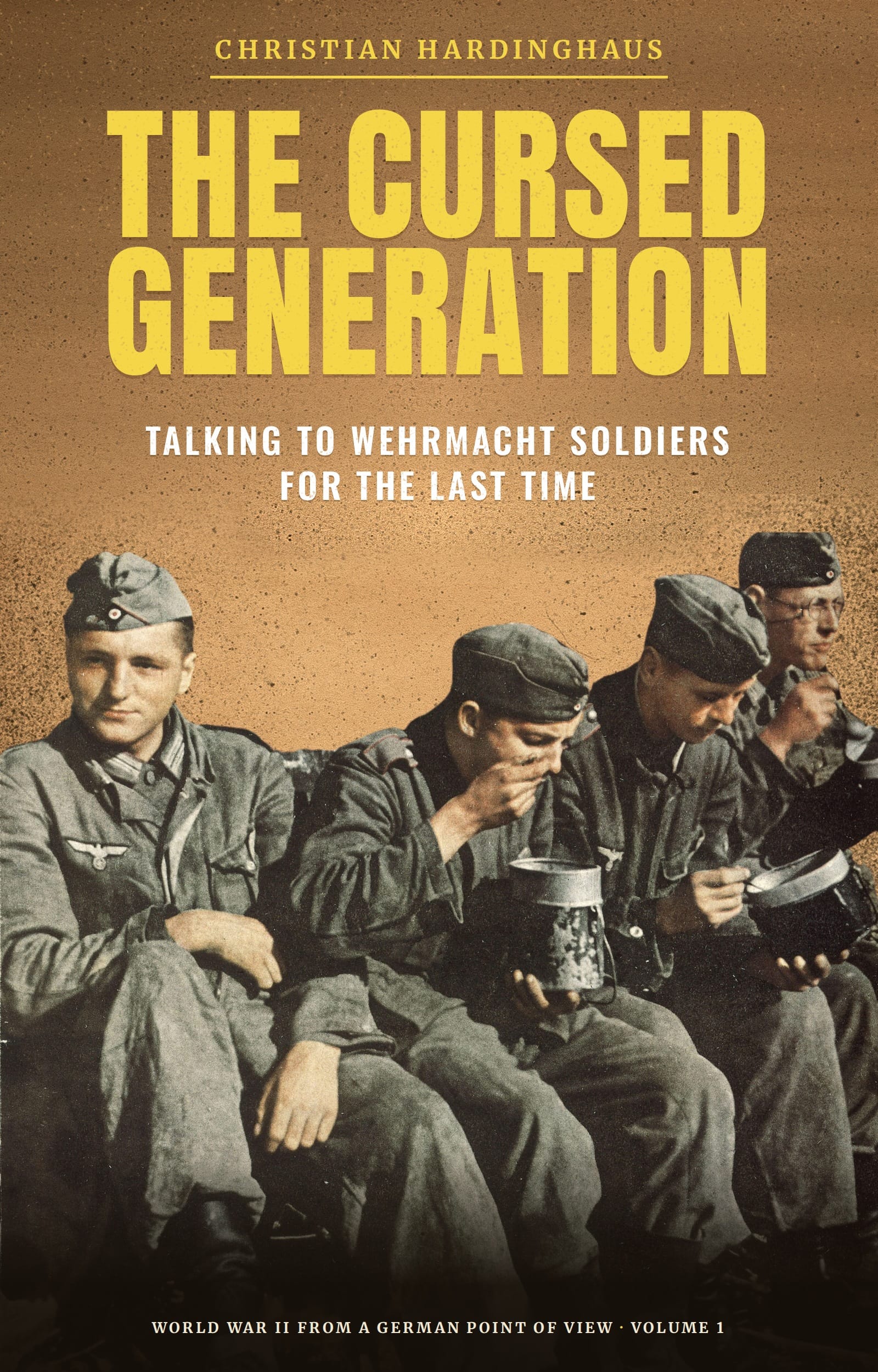
The Cursed Generation
How did ordinary Wehrmacht soldiers experience the war – and how do they see it today? I interviewed the last surviving veterans to find out, including stories of men who, like Sepp Gangl, made their own choices at the end.
About the Book Amazon🗂 Decode This File
- Luftwaffe and Army units → Combat & Chains — Units & Organization
- Ranks like Oberleutnant → Rank & Reputation — Military Ranks
- Branch colors, including the Luftwaffe → Color & Corps — Branch Colors
03Sources & Further Reading
- Pennington, Reina. Wings, Women, and War: Soviet Airwomen in World War II Combat. University Press of Kansas, 2001.
- Noggle, Anne. A Dance with Death: Soviet Airwomen in World War II. Texas A&M University Press, 1994.
- Cottam, Kazimiera J. (ed.). Soviet Airwomen in Combat in World War II. 1983.
- Obituary of Nadezhda Popova, The New York Times, 2013.