
Check the facts. Examine the clues. Keep questions open.
Episode 14
D. B. Cooper: What the Tie and Ransom Money Really Tell Us
A hijacker disappears from an aircraft. A tie is left behind; years later, some of the money is found. Why have these tangible clues not produced an established identity?
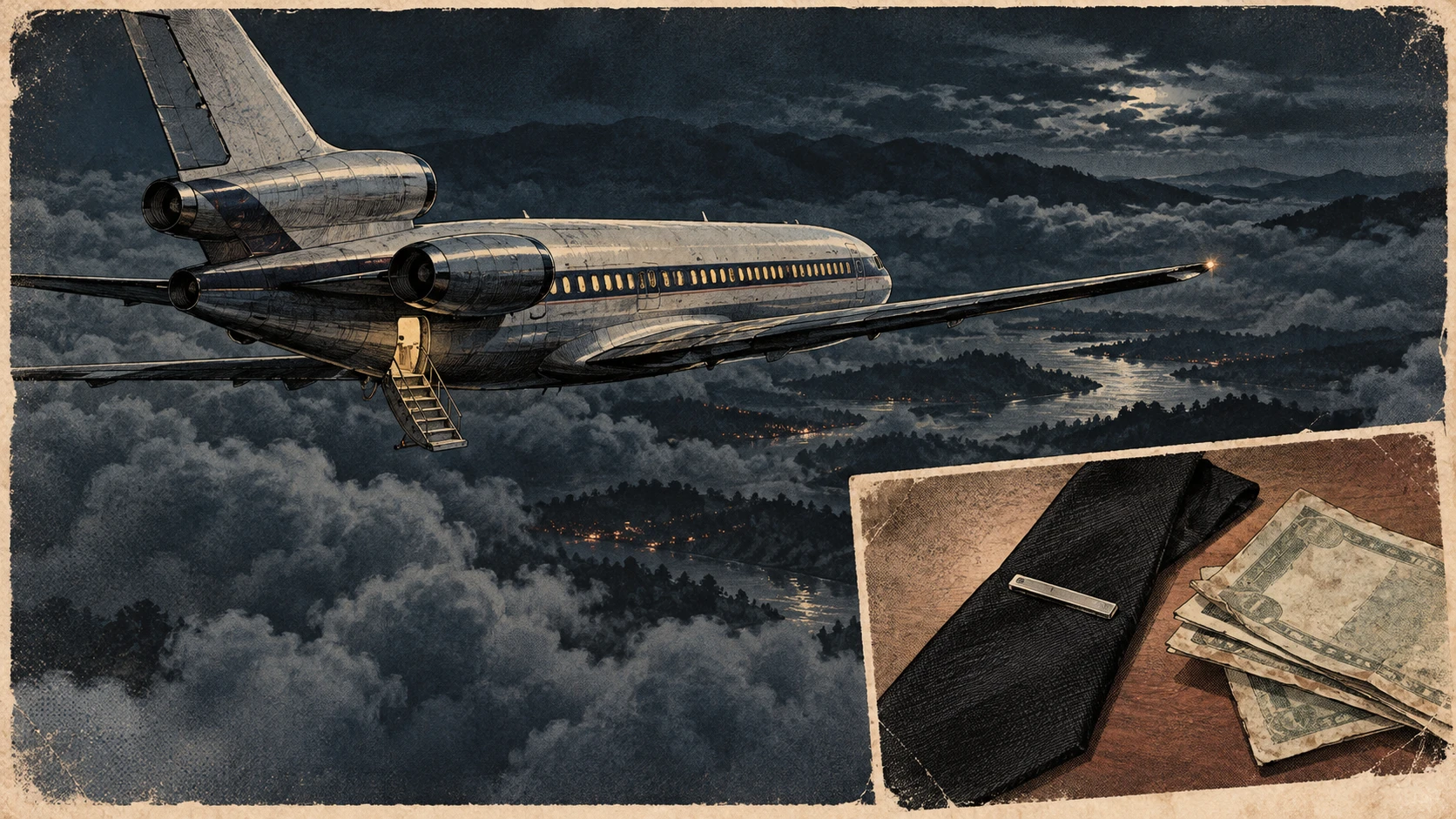
Case facts
The hijacking in brief
On 24 November 1971, a man using the name Dan Cooper boarded a flight from Portland to Seattle. He demanded $200,000 and parachutes. Following another takeoff, he disappeared via the rear stairs. His identity and subsequent fate remain unresolved. [1]
Even the familiar name contains a distortion. According to the FBI, ‘D. B. Cooper’ originated in media reporting rather than the name on the ticket. [1] It is a useful reminder that a widely repeated detail still needs to be traced to its source.
What can the tie reveal?
The hijacker left a black tie behind. The FBI says it provided a DNA sample. [1] That makes the garment a potential source of comparison; it does not automatically attach a name to its wearer.
For any trace, we need to establish what relationship a result actually describes. Evidence of contact and evidence of a particular act are different propositions. Hearing the term DNA is not enough to bypass questions about attribution and comparison.
What does the recovered money establish?
Weathered banknotes discovered in 1980 carried serial numbers matching the ransom. The FBI gives their total value as $5,800. [1] The discovery connects a location with part of the stolen money.
It does not automatically reconstruct every stage of the journey. Money can become separated from its owner. Even with a secure recovery location, the timing and means of deposition require their own evidence. A point on a map is not a continuous route from the aircraft.
Why not choose a familiar suspect?
Resemblance, opportunity and an interesting biography are different kinds of information. A reliable account requires connections that can be tested. A portrait that matches an audience’s idea of the offender cannot replace missing physical links.
A similar later crime does not establish a shared offender either. The temptation is to cast the ending retrospectively: find someone with a remarkable life, then arrange the unresolved details around that person. A sound inquiry must work in the opposite direction.
What did the FBI’s 2016 decision mean?
In 2016, the FBI announced that NORJAK resources would be redirected to other priorities. Evidence was to be preserved, and a reporting route remained for specific physical evidence. [2] This concerned investigative resources; it was not an announcement that the case had been solved.
The clearest account therefore keeps the separate findings visible. The tie is a clue. The money is a clue. Identifying the man between them remains an unresolved task. That distinction offers more understanding than another supposedly final revelation.
Frequently asked questions
Was D. B. Cooper the name he used?
He used Dan Cooper; the familiar initials arose through reporting, according to the FBI.
Does the recovered money prove he died?
It identifies part of the ransom, but alone establishes neither a death location nor his fate.
Did the FBI announce a solution in 2016?
No. Its announcement concerned the reallocation of investigative resources.
Books by Christian Hardinghaus
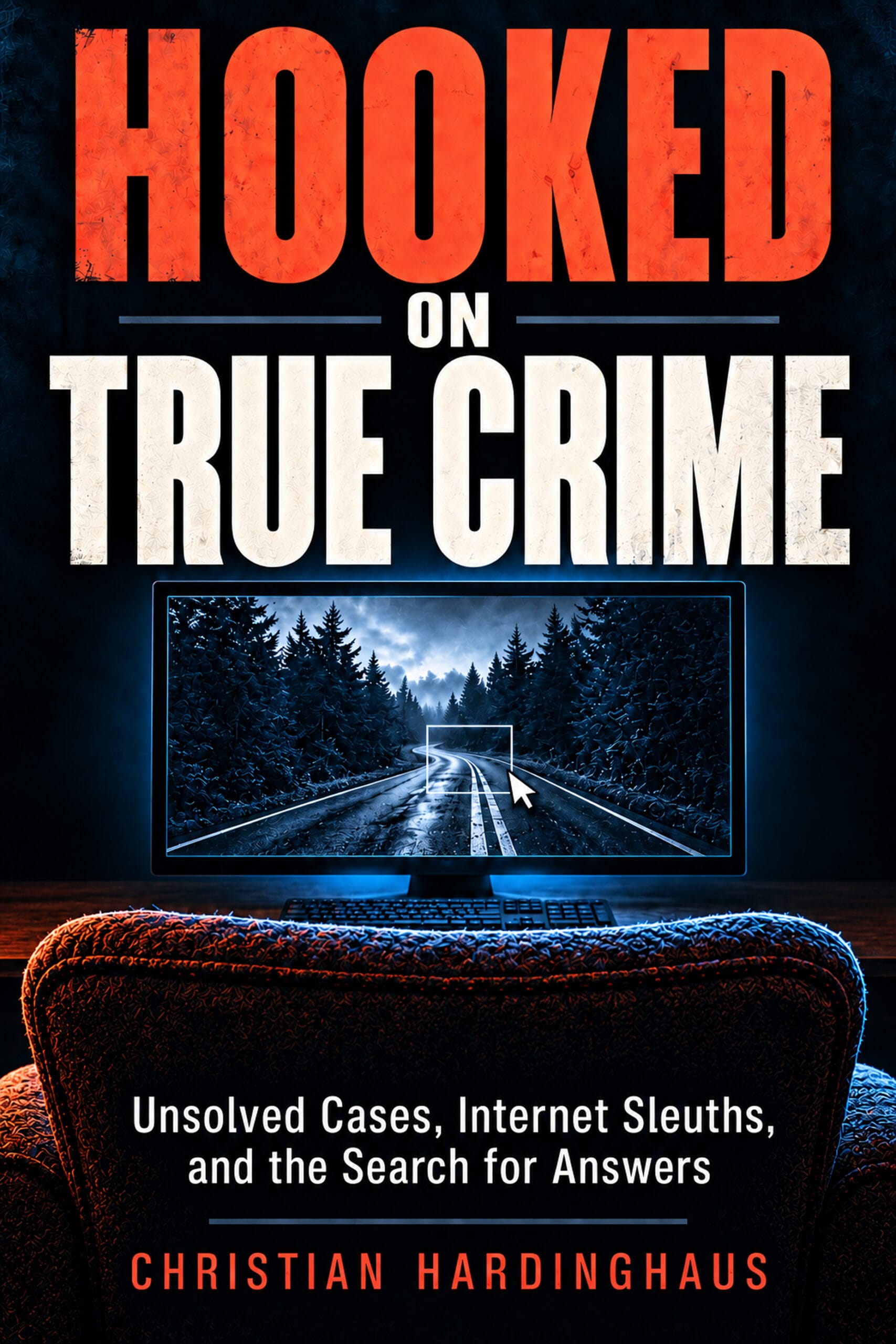
Hooked on True Crime
Why do unresolved cases hold our attention? My book examines internet sleuthing, the search for answers and the responsibility that comes with it.
Explore the book →
Still Lost in Panama
With Annette Nenner, I investigated the disappearance of Kris Kremers and Lisanne Froon. This book follows that separate case in depth; it does not imply a shared explanation for different disappearances.
Explore the book →Panama: digital forensics and timeline · Kris & Lisanne: case lexicon
Sources and context
- FBI: D. B. Cooper Hijacking, case history.
- FBI Seattle: Update on Investigation of 1971 Hijacking by D. B. Cooper, 12 July 2016.
Research date: 19 October 2026. Linked sources support the attributed facts; discussion of inferences is my editorial analysis. Developments after this date are not anticipated here.