
Donnie Darko (2001) Explained: Ending, Plot Twist & Every Interpretation
Richard Kelly’s Donnie Darko is the rare cult film that feels both deeply adolescent and genuinely cosmic. It has a troubled teenager, a suburban school, a creepy rabbit figure, jet-engine impossible logic, and a mood so specific it seems to glow in the dark. Starring Jake Gyllenhaal, Jena Malone, Mary McDonnell, and Drew Barrymore, the film turns teenage alienation into a metaphysical crisis. This Donnie Darko ending explained guide untangles the time loop, the Tangent Universe, and the emotional sacrifice at the film’s core.
On the surface, Donnie Darko follows a sleepwalking teenager who survives a freak accident after being led from his bedroom by a figure named Frank. From there, the film drifts through school satire, family tension, first love, therapy, vandalism, and apocalyptic prophecy. But beneath the melancholy soundtrack and suburban weirdness lies a surprisingly structured mythology. Below we decode everything: the ending, the rules, the clues, and the major interpretations that make the film more than just a teenage fever dream.
Director: Richard Kelly
With: Jake Gyllenhaal, Jena Malone, Mary McDonnell, Drew Barrymore
Year: 2001 | Genre: Psychological Thriller, Science Fiction, Mystery, Drama
Links: TMDB | IMDb | Encyclopedia entry
What Kind of Mindfuck Is This?
🧠 Category: Time-loop / Tangent Universe / ambiguous prophecy 🌀 Twist intensity: 8/10 🔁 Rewatch value: 10/10
Donnie Darko is a time-loop mindfuck wrapped in psychological coming-of-age cinema. Unlike a conventional puzzle thriller, it does not explain every rule inside the dialogue; it lets mythology, mood, and character behavior overlap. The result is a film that can be read as science fiction, religious allegory, mental breakdown, or tragic teenage romance. Its special trick is that all those readings remain emotionally compatible, even when they disagree about what is literally happening.
Donnie Darko Ending in 30 Seconds (Spoilers)
- What is the Tangent Universe?
- A temporary, unstable alternate reality that begins when a jet engine falls through Donnie’s bedroom. It lasts 28 days, 6 hours, 42 minutes and 12 seconds and must be closed before it collapses.
- Why does Donnie die at the end?
- Donnie returns to his bedroom in the primary universe and lets the jet engine kill him. This closes the loop, the Tangent Universe collapses, and the events that unfolded in it never happen.
- Who is Frank?
- Frank is the figure in the rabbit suit who guides Donnie through the 28 days. He is also a human character in the film, and Donnie shoots him in the climax.
- What is the jet engine?
- The jet engine is the “Artifact” that does not belong in the Tangent Universe. Donnie has to send it back to the primary universe so that the loop can close.
- Is Donnie Darko about time travel?
- Yes, in a loose sense. The engine is sent back through time, and Donnie’s sacrifice resets the timeline. The film leaves many details open, which is why it supports several interpretations (see below).
- Does Donnie really die?
- Yes. In the final scene he laughs in his bed as the jet engine crashes into his room, and the next morning he is found dead.
Donnie Darko Ending Explained: What Actually Happens in Donnie Darko
The ending reveals that Donnie has been living inside a temporary alternate reality often called the Tangent Universe. This unstable reality begins when a jet engine falls through his bedroom, but Donnie survives because Frank, a figure in a rabbit suit, leads him outside. Over the next 28 days, Donnie is guided toward one task: return the jet engine — the “Artifact” — to the primary universe and close the loop before the Tangent Universe collapses.
In the climax, Gretchen is killed by a car driven by Frank, and Donnie shoots Frank in the eye. This creates the wound seen on the rabbit figure throughout the film. Donnie then drives Gretchen’s body to the ridge, watches the vortex form, and sends the jet engine back through time. The timeline resets to the night of the accident. This time, Donnie stays in bed and dies when the engine crashes into his room. His death restores the primary universe and prevents the chain of events that led to Gretchen’s death, Frank’s death, and the collapse of reality.
Richard Kelly hides the structure by presenting cosmic mechanics through Donnie’s unstable point of view. We are never given a clean laboratory explanation; instead, we receive fragments: Roberta Sparrow’s book The Philosophy of Time Travel, liquid-like time paths emerging from people’s bodies, Frank’s instructions, Grandma Death’s obsessive checking of the mailbox, and repeated references to fate, fear, love, and sacrifice. The film works because its plot mechanics are strange, but its emotional logic is simple: Donnie chooses to die so others can live.
The Interpretations: 4 Ways to Read Donnie Darko
Reading 1: The Literal Tangent Universe
The most detailed reading treats the film as a literal science-fiction story. The jet engine is an Artifact that has accidentally entered the wrong universe. Donnie is the Living Receiver, a person granted unusual powers — strength, telekinesis, prophetic awareness — in order to guide the Artifact back. Frank and Gretchen become Manipulated Dead, figures who die within the Tangent Universe and help Donnie complete his mission. This reading is strongly supported by the film’s references to Roberta Sparrow’s book and by the Director’s Cut, which makes the mythology more explicit.
Reading 2: A Religious Sacrifice Story
Another powerful reading sees Donnie as a reluctant messianic figure. He is chosen, tempted, guided, and finally sacrificed to save the world. The 28-day countdown becomes an apocalypse clock; Frank becomes a dark angel or messenger; and Donnie’s final laugh before death suggests not despair, but comprehension. He understands the absurd cosmic joke and accepts his role within it. The film’s emotional force comes from this paradox: Donnie appears disturbed for most of the story, but at the end he may be the only one who truly sees clearly.
Reading 3: A Psychological Portrait of Teenage Alienation
The film can also be read through Donnie’s mental health, though this interpretation cannot explain every supernatural detail without reducing the film too aggressively. Donnie is in therapy, takes medication, experiences hallucination-like encounters, and struggles with anger, isolation, and fear. From this angle, Frank externalizes Donnie’s impulses: destruction, rebellion, curiosity, and death drive. The time-travel mythology becomes a symbolic structure through which a teenager gives cosmic meaning to pain that otherwise feels unbearable.
Reading 4: A Satire of Suburban Moral Simplicity
Donnie Darko is also very funny, and its comedy matters. The film attacks a suburban culture that tries to flatten human experience into slogans, self-help schemes, and authoritarian school politics. Jim Cunningham’s fear/love doctrine is absurd because it denies complexity; Kitty Farmer’s moral certainty is monstrous because it cannot recognize suffering; and the school environment punishes ambiguity while missing real danger. Donnie’s mind may be chaotic, but the adult world around him is often more delusional.
How to Decode It: 7 Clues You Probably Missed
- The countdown is literal. Frank tells Donnie exactly when the world will end: 28 days, 6 hours, 42 minutes, and 12 seconds. The film’s structure follows that apocalyptic clock.
- Frank’s eye wound is a time-loop clue. The rabbit figure’s damaged eye is explained only later, when Donnie shoots the human Frank in the same place.
- Roberta Sparrow’s book is the instruction manual. The Philosophy of Time Travel explains terms like Artifact, Living Receiver, and Manipulated Dead, giving the film’s mythology a hidden rulebook.
- The liquid spears reveal predestination. Donnie sees paths extending from people’s bodies, suggesting that events in the Tangent Universe are being pulled toward a predetermined endpoint.
- Gretchen’s name signals rebirth. She says her mother changed her name after fleeing danger, which fits the film’s larger pattern of identity, escape, and second chances.
- Grandma Death is not random local color. Roberta Sparrow has already been through the logic of time travel and waits obsessively for a letter, making her a tragic echo of Donnie’s role.
- The final montage shows residual memory. Characters wake unsettled after the timeline resets, as if some emotional trace of the Tangent Universe remains even though events have been erased.
If You Liked Donnie Darko, Watch These Next
- The Butterfly Effect (2004)Another time-bending tragedy about sacrifice, trauma, and changing the past at a terrible cost.
- Primer (2004)A far more technical time-travel puzzle where causality becomes a maze.
- Mulholland Drive (2001)A dreamlike identity puzzle from the same year, driven by guilt, desire, and fractured reality.
- Coherence (2013)A low-budget cosmic anomaly film where one night splinters reality into terrifying alternatives.
Hungry for more twists? Browse all 180+ Mindfuck Movies with shocking plot twists explained in the encyclopedia.
Movies manipulate you by design – real propaganda does it for power. Learn how in my Manipulation & Propaganda Encyclopedia, and find captivating true crime stories on Between the Lines.
Love a Good Twist? These Are Mine.
If Donnie Darko draws you in because fate, sacrifice, and hidden systems reshape an apparently ordinary world, my thrillers use history in a similar way: secret structures beneath familiar streets, and choices that echo far beyond one life.
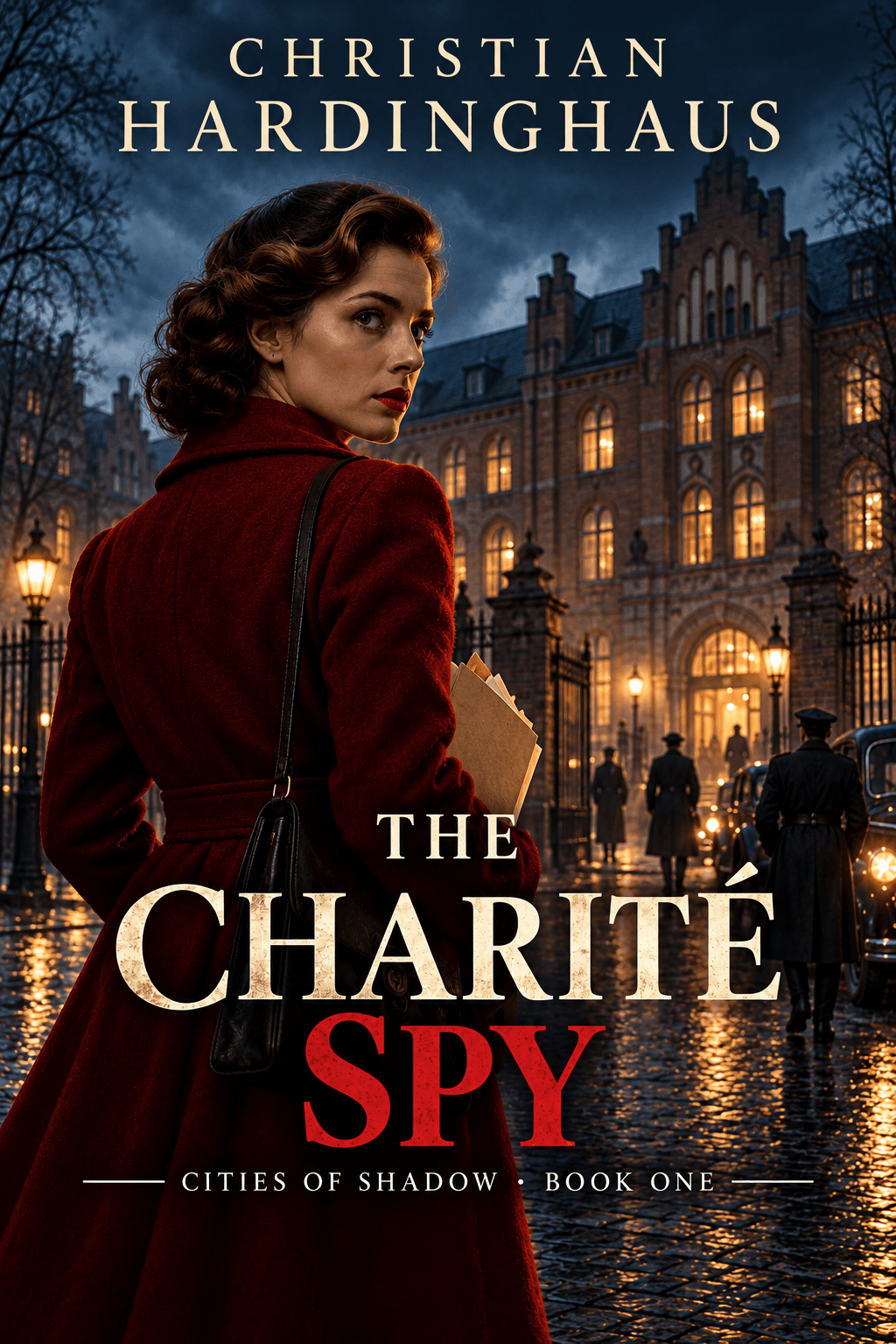
The Charité Spy
WWII spy thriller based on true events – packed with twists nobody sees coming. Part of the Cities of Shadow series.
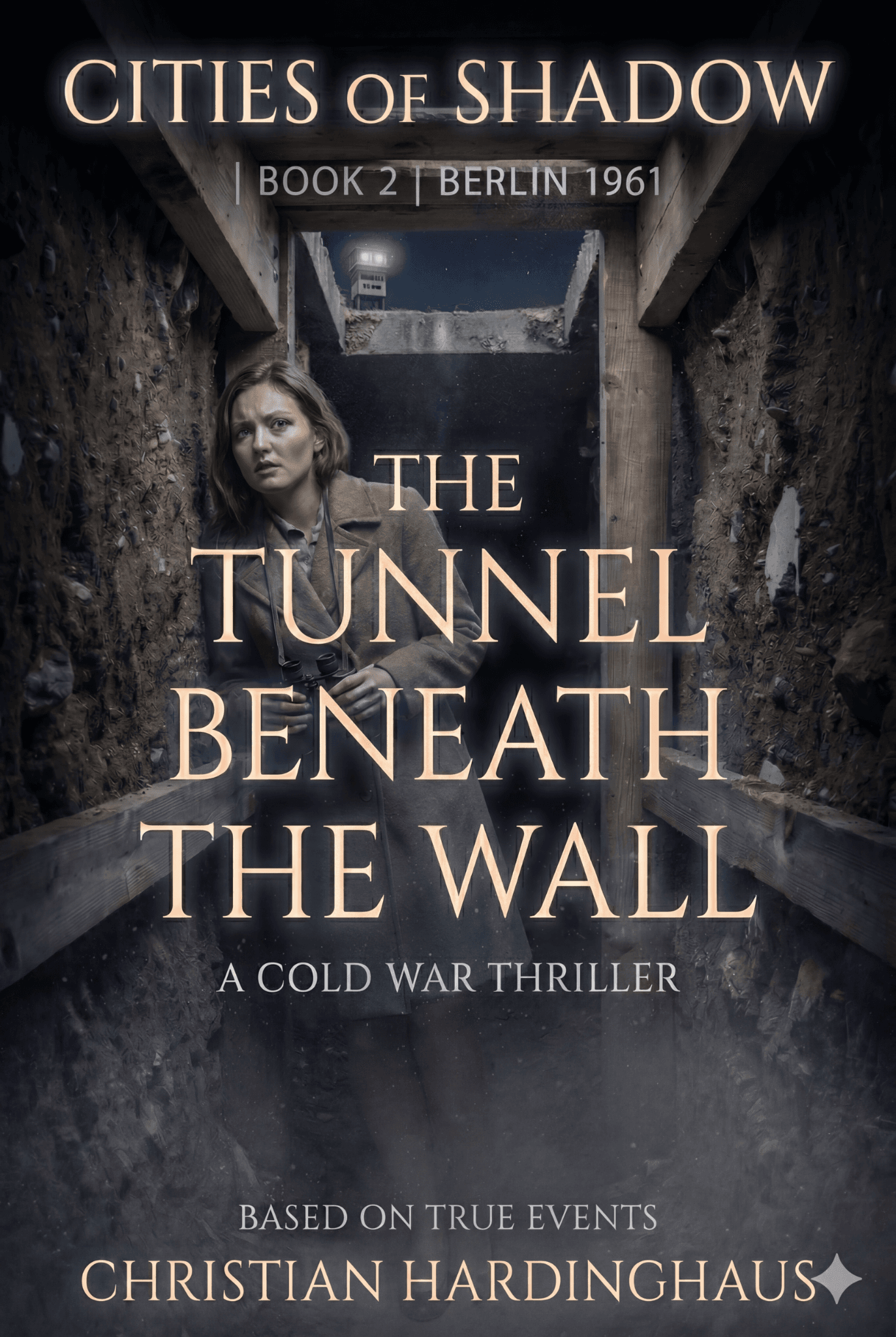
The Tunnel Beneath the Wall
Berlin Wall thriller, 1961 – betrayal, tunnels and a final twist that recontextualizes everything. Cities of Shadow, Book 2.
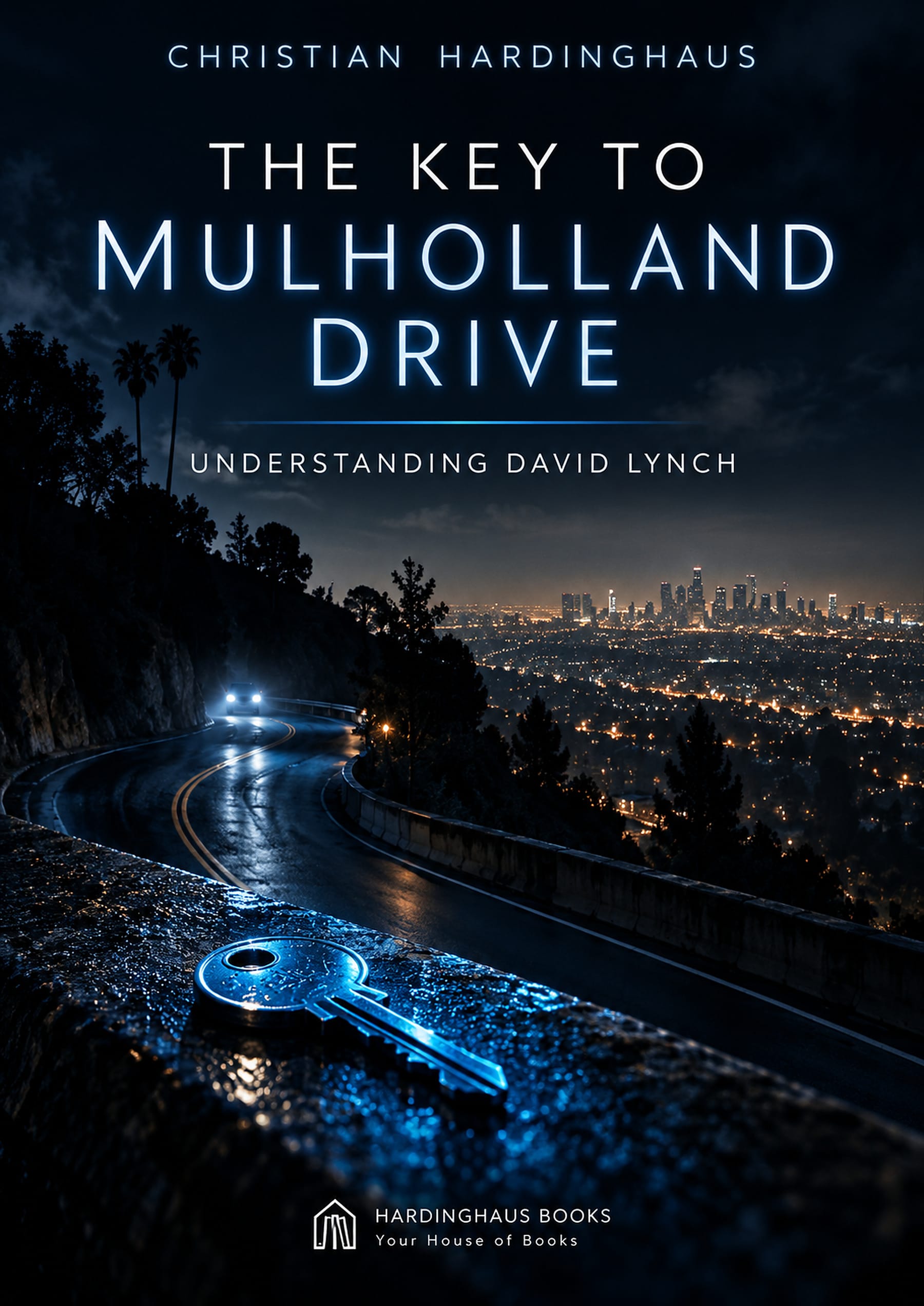
The Key to Mulholland Drive
My full film analysis of David Lynch’s masterpiece – the ultimate mindfuck, finally explained.
Which reading do you believe most: literal time travel, religious sacrifice, psychological breakdown, or suburban satire with cosmic teeth? For more decoded cinema, follow the Between the Frames series on Between the Lines.