

Gone Girl (2014) Explained: Ending, Plot Twist & Every Interpretation
David Fincher’s Gone Girl begins like a prestige missing-person thriller and then slowly turns into something colder, nastier, and far more surgical: an autopsy of marriage, media spectacle, gender performance, and mutually assured destruction. Based on Gillian Flynn’s bestselling novel and starring Ben Affleck, Rosamund Pike, Carrie Coon, Kim Dickens, and Neil Patrick Harris, the film uses a vanishing wife mystery to expose how easily public narratives replace private truth. This Gone Girl ending explained guide decodes the twist, Amy’s plan, Nick’s trap, and the film’s brutally cynical final act.
On the surface, Gone Girl follows Nick Dunne, whose wife Amy disappears on their fifth wedding anniversary. The evidence begins to point toward Nick, the media turns him into a national villain, and the audience is invited to wonder whether he is a grieving husband, a liar, or a murderer. Then the film detonates its central twist and reveals that the real mystery is not simply what happened to Amy. It is how stories are manufactured — by spouses, police, news anchors, and the people who know exactly which role the public wants them to play.
Director: David Fincher
With: Ben Affleck, Rosamund Pike, Carrie Coon, Kim Dickens, Neil Patrick Harris
Year: 2014 | Genre: Psychological Thriller, Mystery, Crime, Satire
Links: TMDB | IMDb | Encyclopedia entry
What Kind of Mindfuck Is This?
🧠 Category: Unreliable narration / media manipulation / marital warfare 🌀 Twist intensity: 9/10 🔁 Rewatch value: 9/10
Gone Girl is a narrative-control mindfuck. It does not bend time, split reality, or reveal a supernatural mechanism. Instead, it shows something more socially terrifying: whoever controls the story controls reality. Diaries, crime scenes, interviews, smiles, affairs, press conferences, and even pregnancy become weapons. Fincher’s film is a puzzle thriller, but its real horror is reputational. The monster is not hidden in the basement. It is on television, smiling under perfect lighting.
Gone Girl Ending Explained: What Actually Happens in Gone Girl
The central twist is that Amy Dunne is not missing because Nick killed her. Amy staged her own disappearance and framed Nick for murder as revenge for his infidelity, emotional neglect, and the collapse of the idealized marriage she believed they were performing. She creates a fake crime scene, plants blood evidence, writes a misleading diary, manipulates anniversary clues, and builds a public image of herself as the endangered, perfect wife. Nick is guilty of being a bad husband and a liar — but not of murdering Amy.
After her plan is disrupted when she is robbed by motel acquaintances, Amy turns to Desi Collings, a wealthy former boyfriend who still idealizes her. She lets him shelter her, then reframes him as her kidnapper and rapist. In one of the film’s most shocking scenes, Amy kills Desi during sex and returns home covered in blood, presenting herself as a heroic survivor. The public celebrates her. The authorities cannot easily challenge her. Nick knows the truth, but Amy has built a story powerful enough to trap him inside it.
The ending is not a romantic reconciliation. It is a hostage situation disguised as marriage. Amy reveals that she is pregnant using Nick’s stored sperm, making it nearly impossible for him to leave without becoming the villain again. Nick stays because the public narrative, the unborn child, and Amy’s capacity for destruction have boxed him in. The final image echoes the opening: Nick looks at Amy and wonders what she is thinking. The difference is that now he knows the answer may be lethal.
The Interpretations: 4 Ways to Read Gone Girl
Reading 1: A Thriller About Narrative Power
The most direct reading is that Gone Girl is about the power to author reality. Amy writes the diary version of herself, stages the crime-scene version of herself, performs the victim version of herself, and finally returns as the survivor version of herself. Nick initially loses because he assumes truth will matter once discovered. Amy understands the darker rule: truth only matters when someone can package it convincingly. In this world, performance beats fact almost every time.
Reading 2: Marriage as Mutually Assured Destruction
The film can also be read as a vicious marital satire. Nick and Amy are not just spouses; they are rival propagandists trapped in the same domestic state. Their marriage began as flirtation and performance, then hardened into resentment, surveillance, punishment, and counter-punishment. By the end, they understand each other more clearly than ever — which does not free them. It makes them a more efficient nightmare. Their relationship survives because both have become experts in the war they created.
Reading 3: The “Cool Girl” Monologue as Gender Performance
Amy’s most famous insight is her critique of the “Cool Girl”: the fantasy woman who exists to flatter male desire while pretending she has no needs of her own. This reading treats Amy not as a feminist hero — she is far too cruel, manipulative, and murderous for that — but as a monstrous product of performance culture. She knows the roles women are rewarded for playing, and she weaponizes them. The film’s discomfort comes from the fact that Amy’s critique can be sharp even when Amy herself is terrifying.
Reading 4: Media Trial and Public Consumption
Gone Girl is also a satire of true-crime media long before the current content economy reached full saturation. Nick’s guilt or innocence becomes less important than whether his face, tone, posture, and smile match the public’s preferred script. Cable news turns grief into sport. Viewers become jurors. Personal tragedy becomes serialized entertainment. The film asks a brutal question: in a media ecosystem built on outrage and archetypes, can an ordinary person survive being miscast?
How to Decode It: 7 Clues You Probably Missed
- Amy’s diary is a performance document. It does not simply record events; it constructs a version of Amy designed to be discovered, pitied, and believed.
- Nick’s smile is a media death sentence. His awkward public behavior matters because the public reads emotion visually, not ethically.
- The anniversary treasure hunt becomes a trap. What once symbolized intimacy is repurposed as evidence, turning romantic ritual into prosecution strategy.
- Amy frames herself through genres. She moves from missing wife to abused woman to captive survivor, choosing roles that audiences already know how to consume.
- Desi loves an imaginary Amy. Like Nick, he responds to a version of Amy that she has learned to project. That fantasy makes him useful — and doomed.
- Margo is the film’s moral anchor. Nick’s twin sister Go sees through performance better than almost anyone, which is why her horror at the ending lands so hard.
- The final pregnancy is narrative handcuffs. Amy does not merely want a child; she creates a public and emotional mechanism that forces Nick back into the role of husband.
If You Liked Gone Girl, Watch These Next
- Memento (2000)Another story about self-deception, constructed evidence, and the terrifying power of narrative control.
- Shutter Island (2010)A mystery that slowly reveals the investigator is trapped inside a self-protective story.
- The Girl on the Train (2016)A domestic thriller built around unreliable perception, missing memories, and public/private guilt.
- Prisoners (2013)A grim missing-person thriller where grief, suspicion, and moral panic distort every decision.
Hungry for more twists? Browse all 180+ Mindfuck Movies with shocking plot twists explained in the encyclopedia.
Movies manipulate you by design – real propaganda does it for power. Learn how in my Manipulation & Propaganda Encyclopedia, and find captivating true crime stories on Between the Lines.
Love a Good Twist? These Are Mine.
If Gone Girl fascinates you because performance, secrets, and public narratives can become weapons, my historical thrillers use similar pressure points: people trapped by roles, institutions that reward lies, and truths dangerous enough to destroy entire lives once exposed.

The Charité Spy
WWII spy thriller based on true events – packed with twists nobody sees coming. Part of the Cities of Shadow series.

The Tunnel Beneath the Wall
Berlin Wall thriller, 1961 – betrayal, tunnels and a final twist that recontextualizes everything. Cities of Shadow, Book 2.
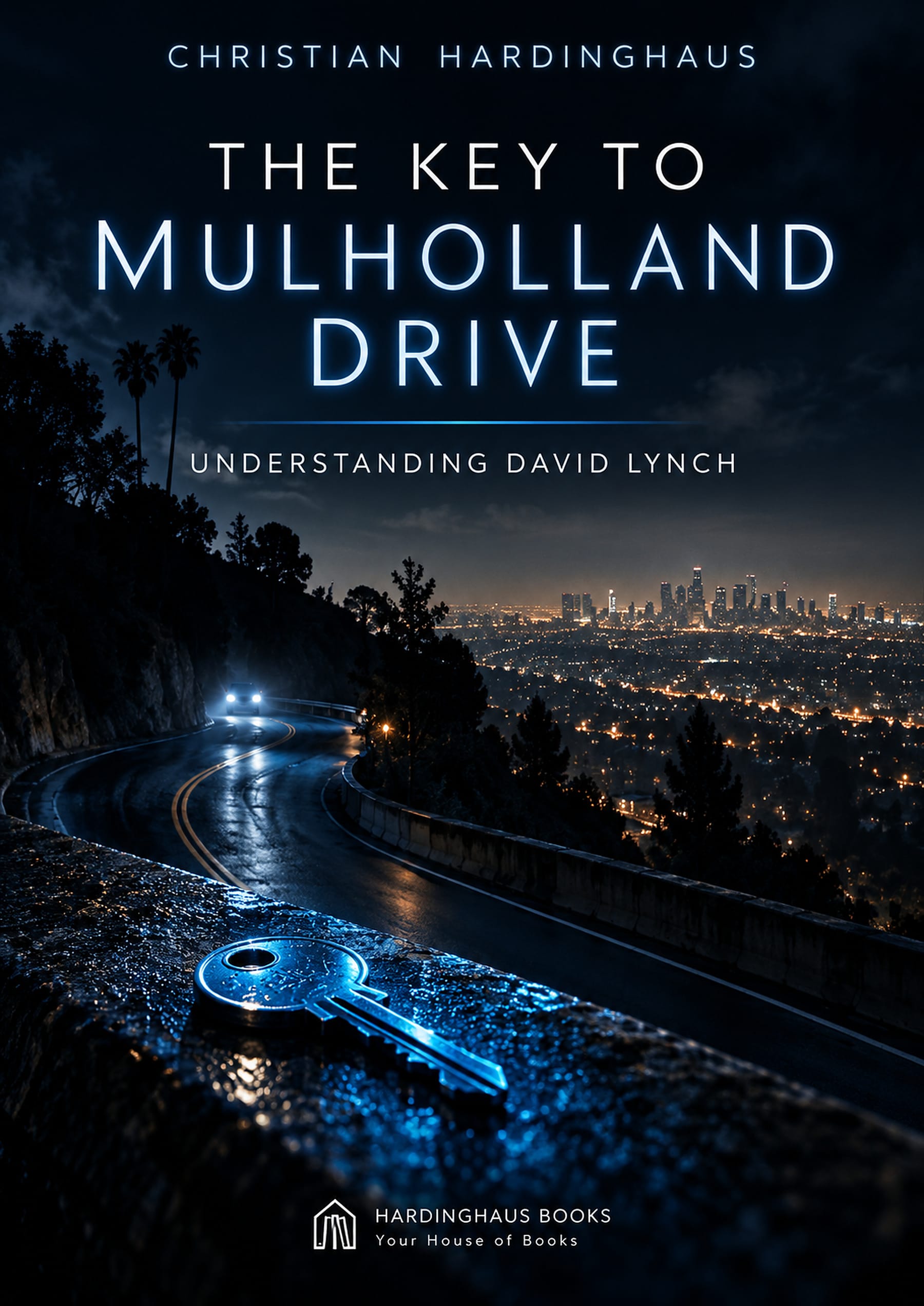
The Key to Mulholland Drive
My full film analysis of David Lynch’s masterpiece – the ultimate mindfuck, finally explained.
Which reading hits hardest: Amy as master manipulator, marriage as warfare, the “Cool Girl” as social horror, or media trial as the real monster? For more decoded cinema, follow the Between the Frames series on Between the Lines.