

Shutter Island (2010) Explained: Ending, Plot Twist & Every Interpretation
Martin Scorsese’s Shutter Island looks at first like an old-fashioned gothic mystery: a storm-lashed island, a vanished patient, suspicious doctors, locked wards, and a U.S. Marshal who refuses to be intimidated. But beneath the fog, the film is less interested in solving a case than in staging the collapse of a man’s entire self-protective fiction. Starring Leonardo DiCaprio, Mark Ruffalo, Ben Kingsley, and Michelle Williams, it weaponizes noir style, trauma imagery, and institutional paranoia. This Shutter Island ending explained guide decodes the twist without reducing the film to a one-line gotcha.
On the surface, the story follows Marshal Teddy Daniels as he arrives at Ashecliffe Hospital to investigate the disappearance of Rachel Solando, a patient who has apparently escaped from a locked room. The deeper Teddy searches, the more the island seems to hide: experiments, conspiracies, missing files, and doctors who know more than they say. Below we decode everything: the ending, the role-play, the clues, and the competing interpretations of that haunting final line.
Director: Martin Scorsese
With: Leonardo DiCaprio, Mark Ruffalo, Ben Kingsley, Michelle Williams
Year: 2010 | Genre: Psychological Thriller, Mystery, Neo-Noir, Drama
Links: TMDB | IMDb | Encyclopedia entry
What Kind of Mindfuck Is This?
🧠 Category: Delusional identity twist / unreliable investigation 🌀 Twist intensity: 9/10 🔁 Rewatch value: 10/10
Shutter Island is an unreliable-investigation thriller: the detective story is real as a performance, but false as an account of reality. Scorsese makes us follow Teddy’s procedural confidence until the very tools of investigation — clues, interviews, maps, names, memories — become symptoms. The film’s mindfuck does not simply ask whether Teddy can solve the mystery. It asks whether the mystery exists to protect him from something worse than not knowing.
Shutter Island Ending in 30 Seconds (Spoilers)
- What is the twist in Shutter Island?
- “Teddy Daniels” is not a U.S. Marshal. He is Andrew Laeddis, a patient at Ashecliffe Hospital. His partner “Chuck Aule” is actually his psychiatrist, Dr. Lester Sheehan, and the whole investigation is a staged role-play designed to break through Andrew’s delusion.
- Who is Andrew Laeddis?
- Andrew Laeddis is Teddy’s real identity. According to the film, his wife Dolores drowned their three children, and he then shot her. He invented the Teddy persona to escape that guilt.
- Who is Rachel Solando?
- Rachel Solando, the supposedly missing patient, is part of the staged scenario. The name is a disguise built from Andrew’s own past, which is why her case never leads anywhere.
- Is Teddy really insane?
- The most common reading is yes: he is a patient suffering from a deep delusion. The film still leaves room for other readings, which are explained in the interpretations section below.
- What does the last line mean?
- After a seeming relapse, Andrew asks whether it would be worse to live as a monster or to die as a good man. Many viewers read this as him understanding the truth and choosing the lobotomy as a form of self-punishment.
- Does Teddy get a lobotomy at the end?
- The film implies it. In the final scene he is led toward the lighthouse, where the doctors have said the procedure is carried out, but the film never shows it.
Shutter Island Ending Explained: What Actually Happens in Shutter Island
The twist is that “Teddy Daniels” is not a U.S. Marshal investigating Ashecliffe. He is Andrew Laeddis, a patient at the hospital. His supposed partner Chuck Aule is actually Dr. Lester Sheehan, his psychiatrist. The missing patient Rachel Solando is part of an elaborate therapeutic role-play designed by Dr. Cawley and Sheehan as a final attempt to break Andrew’s delusion before the institution resorts to lobotomy.
Andrew created the Teddy identity because he could not face the truth of his past: his wife Dolores, mentally ill and untreated, drowned their three children. Andrew then shot Dolores. To survive that unbearable guilt and grief, he reinvented himself as a heroic lawman hunting an arsonist named Andrew Laeddis and investigating a murderous mother named Rachel Solando. Those names are anagrams and psychic disguises. The conspiracy is not on the island. The conspiracy is Andrew’s mind trying to hide from itself.
Scorsese hides the twist by letting the role-play operate like a genre film. The guards, doctors, orderlies, and patients all behave oddly because they are participating in or reacting to Andrew’s delusion. Their pauses, glances, and discomfort look like evidence of a cover-up, but on rewatch they reveal people improvising around a dangerous patient. The final scene adds the last ambiguity: Andrew seems to relapse, but then asks whether it is worse to live as a monster or die as a good man. That line suggests he may understand the truth and is choosing lobotomy as a form of self-execution.
The Interpretations: 4 Ways to Read Shutter Island
Reading 1: The Therapeutic Role-Play Worked — Then Andrew Chose Oblivion
The strongest reading is that the treatment succeeds. Andrew remembers who he is, accepts that Dolores killed their children, and understands that he killed Dolores. In the morning, he pretends to be Teddy again so the doctors will proceed with the lobotomy. His final sentence to Sheehan is too lucid, too morally precise, to be a simple delusional outburst. “Die as a good man” means he would rather erase himself than continue living with the knowledge of what happened.
Reading 2: Teddy Really Relapses
The more literal institutional reading is that Andrew briefly recovers in the lighthouse but cannot sustain the truth. By the next morning, he has retreated into the Teddy persona again. Dr. Sheehan’s pained reaction supports this possibility: he hoped the breakthrough would last, and it did not. In this reading, the final line may be a flicker of insight rather than a fully conscious plan — a tragic echo from the real Andrew trapped beneath the returning delusion.
Reading 3: A Trauma Film Disguised as Conspiracy Cinema
Shutter Island can also be read as a film about postwar trauma and survivor guilt. Andrew is haunted by Dachau, by violence, by moral injury, and by the domestic catastrophe he failed to prevent. His conspiracy fantasy gives shape to unbearable chaos. Instead of being a grieving father and traumatized veteran, he becomes a righteous investigator. The mind chooses noir because noir offers motives, villains, clues, and solutions. Trauma offers none of those comforts.
Reading 4: Institutional Power and the Fear of Psychiatry
The film still uses the iconography of institutional horror for a reason. Even though the doctors are largely telling the truth, the island remains frightening: locked wards, forced treatment, experimental language, and the threat of lobotomy. Scorsese does not turn psychiatry into a cartoon villain, but he does show how terrifying mental health treatment can appear from inside paranoia. The tragedy is that Andrew’s fear of control and his need for care occupy the same physical space.
How to Decode It: 7 Clues You Probably Missed
- Chuck struggles with his gun holster. A real Marshal would handle the weapon smoothly. Chuck is Dr. Sheehan playing a role, and the awkwardness gives him away early.
- The staff look nervous, not merely suspicious. Their glances suggest people managing a volatile patient within an elaborate therapeutic experiment.
- The names are anagrams. Edward Daniels rearranges into Andrew Laeddis; Rachel Solando rearranges into Dolores Chanal, Andrew’s wife.
- Water repeatedly triggers Andrew’s trauma. He hates water because his children drowned. The film surrounds him with rain, ocean, glasses, and flooded memory.
- Fire is the false memory system. Andrew imagines Laeddis as an arsonist because fire allows him to replace drowning with a more narratively manageable trauma.
- Dolores appears as both desire and accusation. Her hallucinated presence comforts Andrew, but also keeps pulling him toward the truth he is trying to bury.
- The lighthouse is not the conspiracy headquarters he imagines. It is the place where the fantasy finally has to meet clinical reality.
If You Liked Shutter Island, Watch These Next
- Memento (2000)Another fractured identity thriller about memory, guilt, and a self-protective lie.
- The Machinist (2004)A guilt-driven psychological breakdown where the body and mind become evidence.
- Jacob’s Ladder (1990)A trauma nightmare in which reality fractures around pain, war, and denial.
- Identity (2003)A stormy locked-location mystery that turns into a psychological identity puzzle.
Hungry for more twists? Browse all 180+ Mindfuck Movies with shocking plot twists explained in the encyclopedia.
Movies manipulate you by design – real propaganda does it for power. Learn how in my Manipulation & Propaganda Encyclopedia, and find captivating true crime stories on Between the Lines.
Love a Good Twist? These Are Mine.
If Shutter Island grips you because identity, guilt, and hidden truth turn investigation into self-destruction, my historical thrillers work similar pressure points: secrets buried by institutions, people trapped in roles, and revelations that arrive too late to leave anyone unchanged.

The Charité Spy
WWII spy thriller based on true events – packed with twists nobody sees coming. Part of the Cities of Shadow series.

The Tunnel Beneath the Wall
Berlin Wall thriller, 1961 – betrayal, tunnels and a final twist that recontextualizes everything. Cities of Shadow, Book 2.
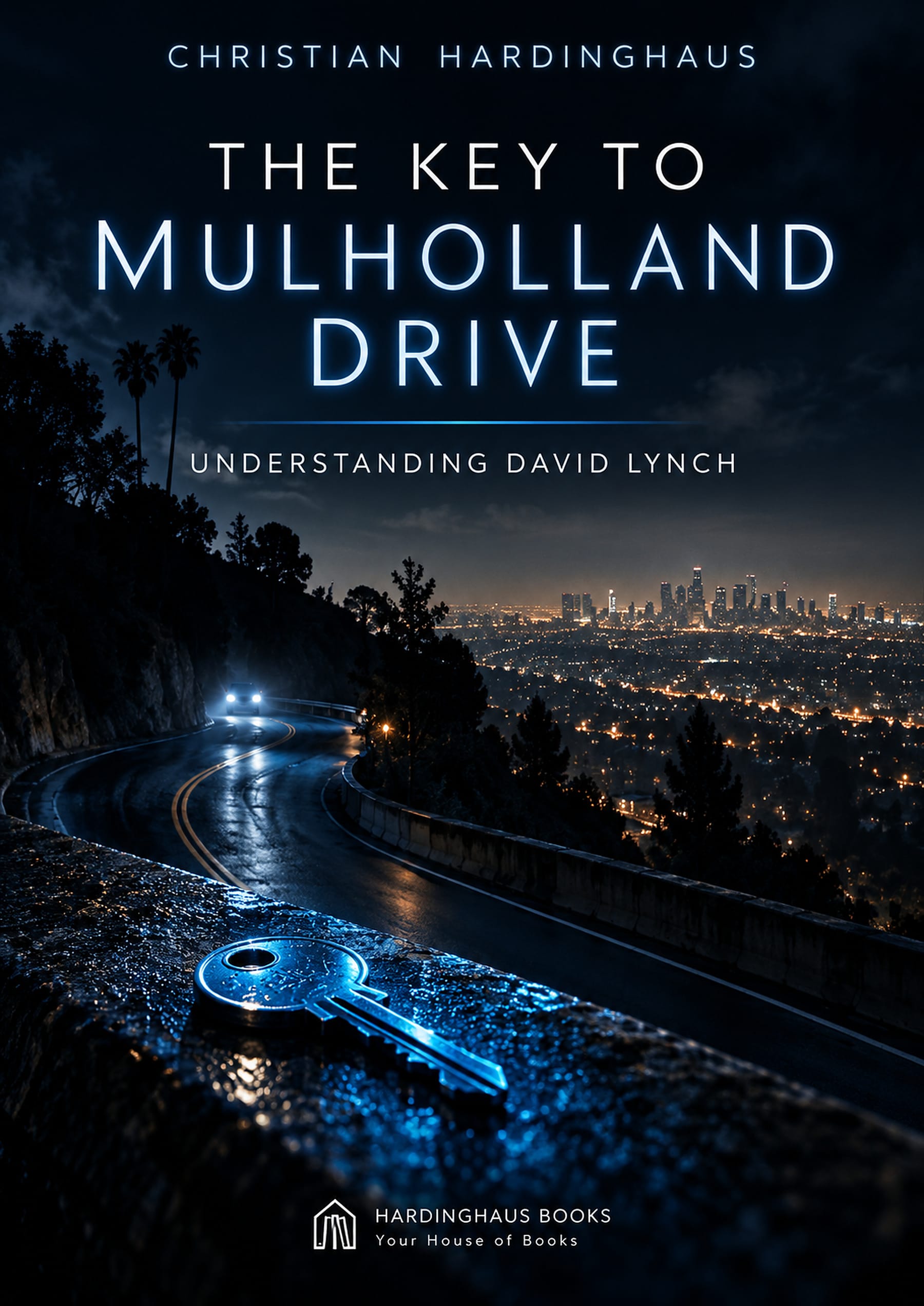
The Key to Mulholland Drive
My full film analysis of David Lynch’s masterpiece – the ultimate mindfuck, finally explained.
Which reading convinces you most: Andrew’s conscious self-erasure, a genuine relapse, trauma disguised as conspiracy, or an institutional horror story with a tragic human center? For more decoded cinema, follow the Between the Frames series on Between the Lines.