

Untold Stories, Hidden Facts & Curiosities of World War II — What’s Not in the Textbooks · by Dr. Christian Hardinghaus
Wilhelm Gustloff: The Night More Than 9,000 People Died in the Baltic Sea
Six times as many deaths as the Titanic – yet almost no one knows its name. The story of the refugee ship that became the deadliest shipwreck in history.
Gotenhafen, January 30, 1945. It’s 0°F, snow is blowing across the harbor, and the pier is packed with people clutching suitcases, strollers and bedding. The Red Army is closing in on East Prussia, and a place on any ship can mean survival. At midday, the Wilhelm Gustloff casts off. She was built for fewer than 1,500 passengers. More than 10,000 people are on board. Nine hours later, three torpedoes slam into her hull.
01The Story: The Sinking of the Wilhelm Gustloff
The Wilhelm Gustloff was launched in 1937 as a cruise ship for the Nazi leisure organization “Strength Through Joy” (Kraft durch Freude). She was meant to give German workers vacations at sea and served as a showpiece of the regime. She was named after Wilhelm Gustloff, a Swiss-based Nazi party official assassinated in Davos in 1936. When the war began, she became a hospital ship and later a floating barracks for U-boat crews in training at Gotenhafen – today’s Gdynia in Poland.
In January 1945, the Eastern Front collapsed. Hundreds of thousands of civilians fled East and West Prussia toward the Baltic coast. The German navy launched Operation Hannibal, the largest seaborne evacuation in history. The Gustloff was to carry refugees, wounded soldiers and naval personnel west. How many people actually boarded is still unknown – at some point, nobody was counting anymore. Survivor and later historian Heinz Schön, who served aboard as an assistant purser, estimated more than 10,000.
On the evening of January 30, the Soviet submarine S-13 under Captain Alexander Marinesko spotted the ship off the Pomeranian coast near Stolpmünde. The Gustloff was running with her navigation lights on because her officers feared colliding with German minesweepers coming the other way. Shortly after 9 p.m., three torpedoes struck. The ship sank in about an hour. Many people were trapped below deck; others froze to death in the icy water. Lifeboats were iced over or far too few.
Escort vessels and rescue boats pulled roughly 1,200 people from the sea. By most estimates, more than 9,000 died – thousands of them children. That makes the sinking of the Wilhelm Gustloff the deadliest maritime disaster in history. For comparison: about 1,500 people died on the Titanic. Within weeks, the General von Steuben and, in April, the Goya went down as well, each taking thousands of lives.
02Why It’s Not in the Textbooks
Every schoolchild knows the Titanic. Almost no one knows the Gustloff. That’s not because the numbers are small; it’s because of how the war is remembered. For decades, the suffering of German civilians was an uncomfortable subject. Rightly, the focus was on Germany’s responsibility for the war and the Holocaust. The fate of German refugees was often left to expellee associations and became politically loaded in a way that kept it out of mainstream history.
The Cold War added a second layer. In East Germany, a sinking by a Soviet submarine was not a story anyone wanted told. In the Soviet Union, Marinesko was eventually celebrated as a hero. It took Nobel laureate Günter Grass and his 2002 novella Crabwalk to bring the disaster back into public view – sparking a debate about how to talk about German victims without obscuring the causes.
That is exactly why the Gustloff matters. It shows that two things can be true at once: the war Nazi Germany started came back to its origin – and it struck people who had made none of those decisions. Children, mothers, the elderly, the wounded. Telling their story doesn’t relativize anything. It completes the picture.
✚Myth-Check
The claim: “The Wilhelm Gustloff was the deadliest shipwreck of all time.”
Based on the standard estimates of more than 9,000 deaths, yes – no other single ship sinking has a documented higher death toll. The exact number remains uncertain because no one knew how many people were on board. The sinking of the Goya in April 1945 ranks among the worst disasters as well.
Verdict: TRUE
The claim: “The Gustloff was purely a refugee ship.”
The vast majority aboard were civilians. But the ship also carried naval personnel, female naval auxiliaries and wounded soldiers, was armed with anti-aircraft guns and did not sail as a marked hospital ship. Under the laws of war at the time, it was therefore not a protected target. That doesn’t lessen the tragedy – but it explains why the attack is judged differently in legal and moral terms.
Verdict: COMPLICATED
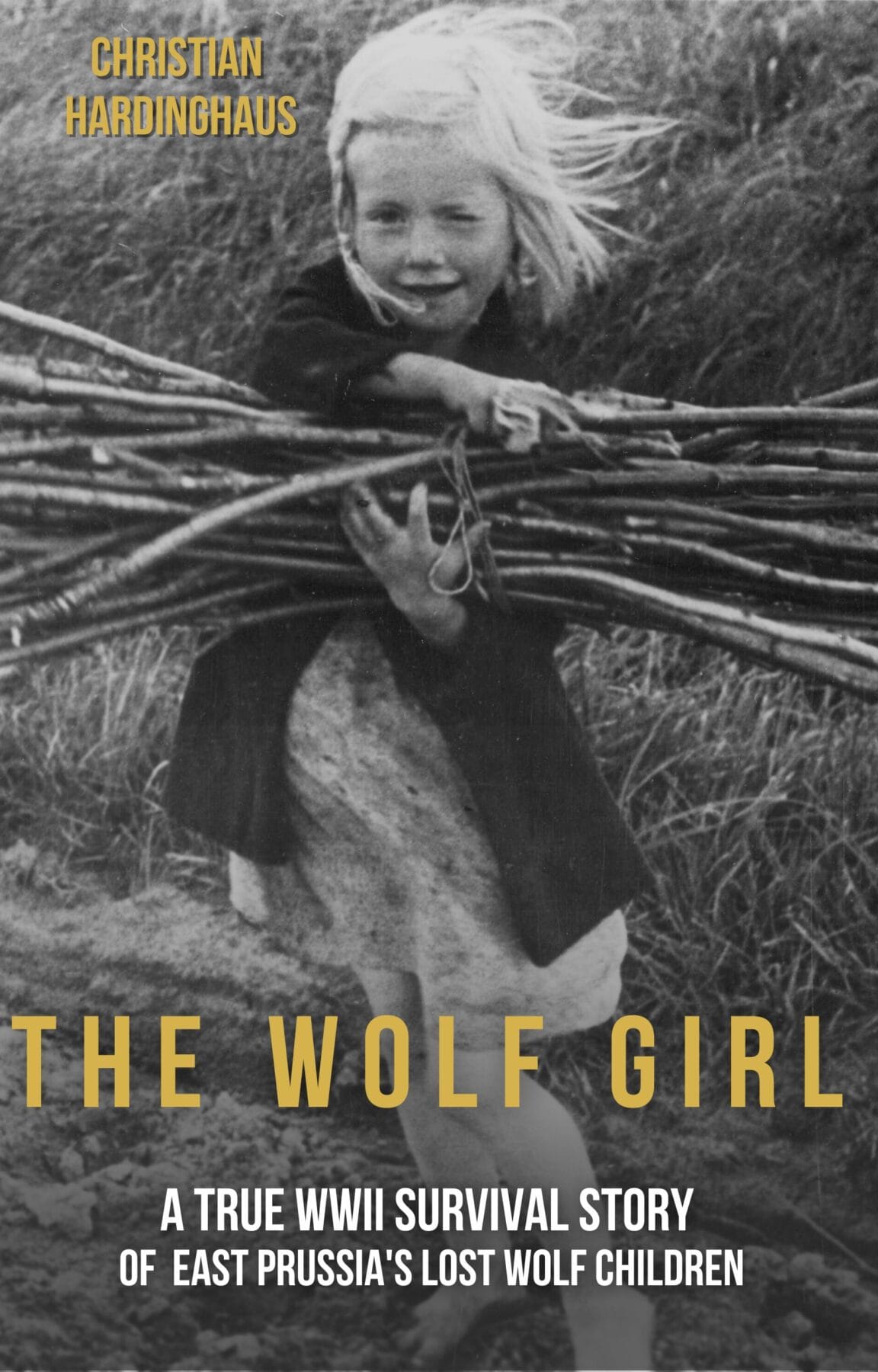
The Wolf Girl
The true story of eleven-year-old Ursula Dorn, one of thousands of German children left to survive alone in East Prussia after 1945 – the same collapse the Gustloff’s passengers were fleeing. Based on my interviews with Ursula herself.
About the Book Amazon🗂 Decode This File
- Kriegsmarine & Operation Hannibal → Combat & Chains — Units & Organization
- “Strength Through Joy” → Command & Compliance — Nazi Organizations
- Children on the run → The Wolf Children of East Prussia
- The German perspective → World War II from a German Point of View
03Sources & Further Reading
- Prince, Cathryn J. Death in the Baltic: The World War II Sinking of the Wilhelm Gustloff. New York: Palgrave Macmillan, 2013.
- Dobson, Christopher, John Miller and Ronald Payne. The Cruellest Night. London: Hodder & Stoughton, 1979.
- Grass, Günter. Crabwalk. Orlando: Harcourt, 2003.
- Schön, Heinz. Die Gustloff-Katastrophe. Stuttgart: Motorbuch Verlag.